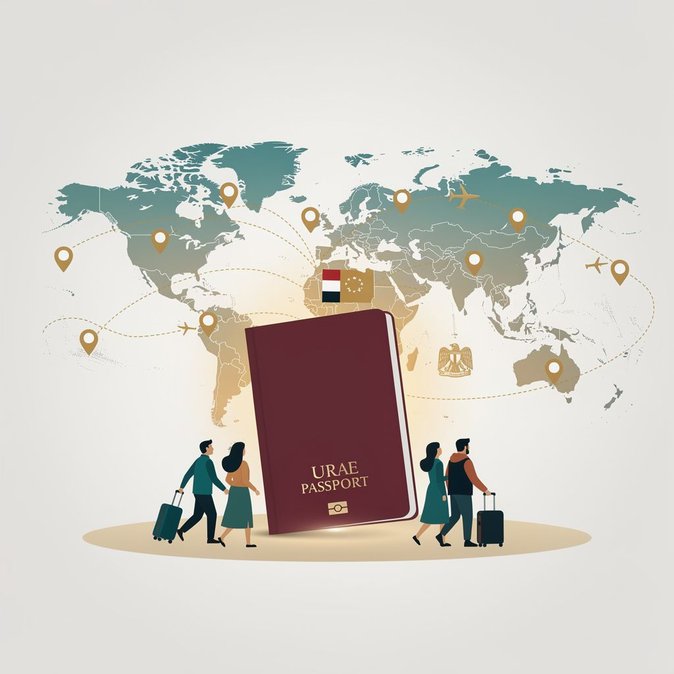
The latest Henley Passport Index update, highlighted by Gulf News on July 11, 2026, shows the United Arab Emirates climbing to joint second place worldwide. Emirati citizens now enjoy visa-free, visa-on-arrival or electronic travel authorisation to 188 destinations—tied with Japan and South Korea and just four short of top-ranked Singapore.
Companies and individual travellers eager to leverage this expanded mobility can streamline the paperwork through VisaHQ, whose UAE portal supplies up-to-date entry rules, digital application tools and concierge support for more than 200 jurisdictions—helping mobility managers cut processing time, stay compliant and avoid last-minute border surprises.
The UAE’s meteoric rise—57 places in twenty years—reflects an aggressive foreign-policy focus on bilateral visa-waiver agreements and the launch of high-profile long-term residence schemes such as the Golden, Green and Remote-Work visas that have bolstered the country’s soft power. For corporates headquartered in Dubai or Abu Dhabi, a stronger passport translates into faster executive mobility, lower consular costs and greater flexibility when deploying Emirati talent to overseas projects. It also reinforces the UAE’s status as a gateway hub: foreign professionals considering relocation see a passport-upgrade pathway that materially increases their own future travel freedom. Mobility teams should note that the index also records continuing improvements for Gulf Cooperation Council neighbours—Saudi Arabia, Qatar and Bahrain all gained destinations—potentially easing multi-market project staffing. Conversely, the report flags declines for India and shifts for Pakistan, affecting regional assignees’ onward-travel options. With corporate travel rebounding after the 2025 downturn, companies are advised to factor passport-ranking data into route-planning, per-diem budgeting and risk assessments, particularly where trips involve mix-and-match visa regimes such as Europe’s ETIAS, expected to launch in mid-2027.
Companies and individual travellers eager to leverage this expanded mobility can streamline the paperwork through VisaHQ, whose UAE portal supplies up-to-date entry rules, digital application tools and concierge support for more than 200 jurisdictions—helping mobility managers cut processing time, stay compliant and avoid last-minute border surprises.
The UAE’s meteoric rise—57 places in twenty years—reflects an aggressive foreign-policy focus on bilateral visa-waiver agreements and the launch of high-profile long-term residence schemes such as the Golden, Green and Remote-Work visas that have bolstered the country’s soft power. For corporates headquartered in Dubai or Abu Dhabi, a stronger passport translates into faster executive mobility, lower consular costs and greater flexibility when deploying Emirati talent to overseas projects. It also reinforces the UAE’s status as a gateway hub: foreign professionals considering relocation see a passport-upgrade pathway that materially increases their own future travel freedom. Mobility teams should note that the index also records continuing improvements for Gulf Cooperation Council neighbours—Saudi Arabia, Qatar and Bahrain all gained destinations—potentially easing multi-market project staffing. Conversely, the report flags declines for India and shifts for Pakistan, affecting regional assignees’ onward-travel options. With corporate travel rebounding after the 2025 downturn, companies are advised to factor passport-ranking data into route-planning, per-diem budgeting and risk assessments, particularly where trips involve mix-and-match visa regimes such as Europe’s ETIAS, expected to launch in mid-2027.