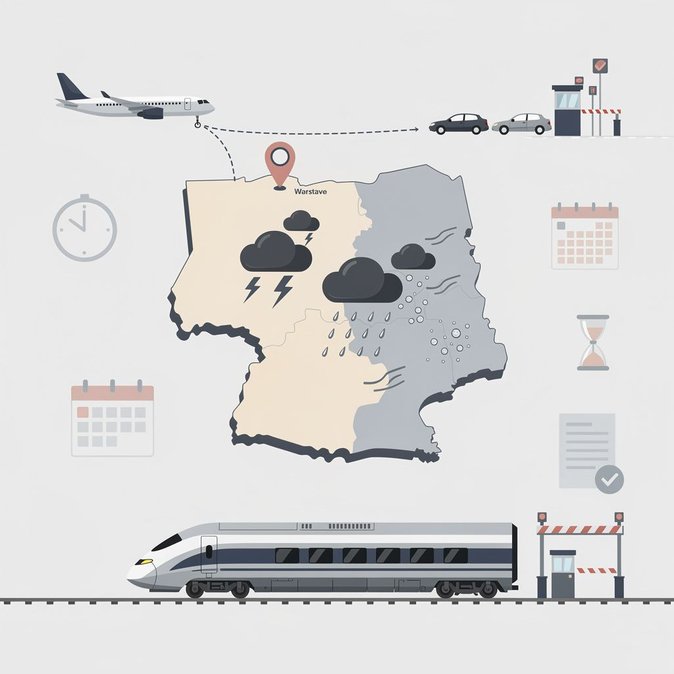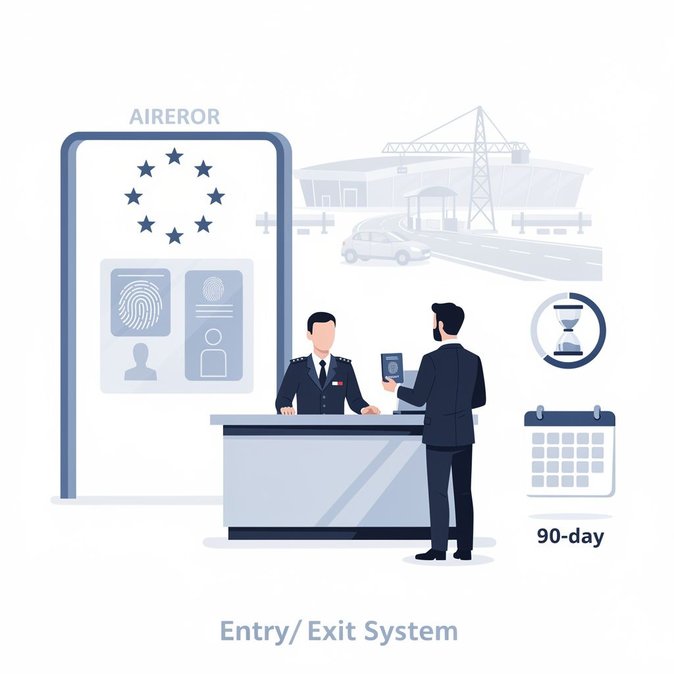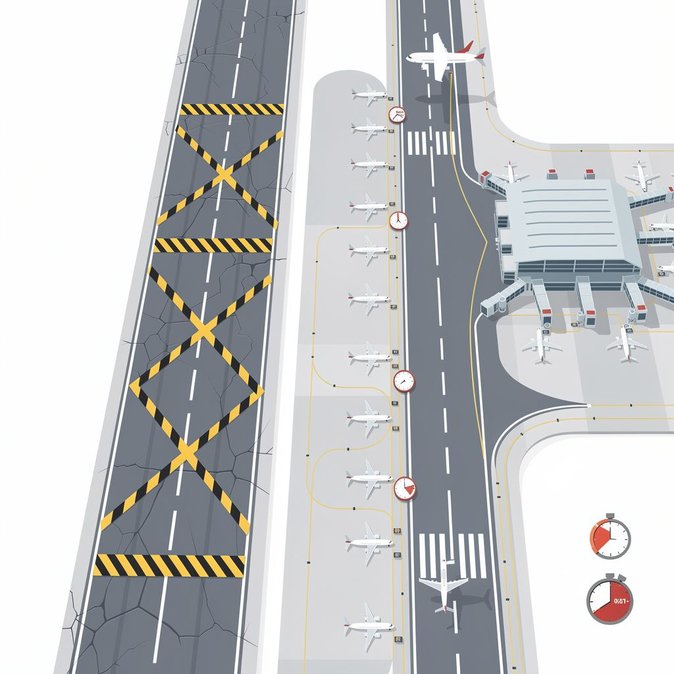
Warsaw’s Chopin Airport – Poland’s largest international hub and the main gateway for corporate traffic – unexpectedly shut one of its two runways on the evening of 11 July after engineers detected surface cracks during a routine inspection. According to Polish Airports State Enterprise (PPL) spokesman Piotr Rudzki, the decision was made “out of an abundance of caution” because any irregularity on a take-off surface can cause foreign-object damage to engines. All arrivals and departures have been switched to the parallel runway, reducing hourly movements from 46 to roughly 30. Airport maintenance teams began overnight repairs using quick-curing sealant, but the work is temperature-sensitive and will extend into the early hours of Sunday. PPL hopes to reopen the disabled strip before the Monday morning business-travel peak, yet acknowledges that strong afternoon heat could slow curing. Airlines have already issued travel waivers; LOT has advised passengers to allow extra time for check-in, and Lufthansa has warned of knock-on delays to its Frankfurt and Munich banks. The timing is awkward: Chopin is handling record traffic – 24 million passengers in 2025 and an expected 26 million this year – driven by pent-up corporate demand and Euro 2026 summer tourism. Slots are tight even under normal conditions, and summer thunderstorms often force flow-control measures. With a single runway in use, average delays of 20–40 minutes are forecast during the weekend rush, particularly for wide-body long-haul departures that require longer separation. For global-mobility managers the key takeaway is contingency planning. Travellers connecting onward within the Schengen Area should consider at least a two-hour buffer, while non-Schengen flyers should factor in both security queues and the new biometric Entry/Exit System (EES) that can add 10–15 minutes at passport control. Employers moving assignees should monitor re-routing options via Kraków or Berlin Brandenburg if critical meetings are scheduled for early next week. The incident also highlights the importance of infrastructure resilience as Poland pushes ahead with its Centralny Port Komunikacyjny (CPK) mega-hub project. Until CPK opens, Chopin remains a single-point-of-failure for Poland’s business-travel ecosystem, and unexpected technical closures will continue to ripple through multinational travel programmes.
Source: Rzeczpospolita (rp.pl)