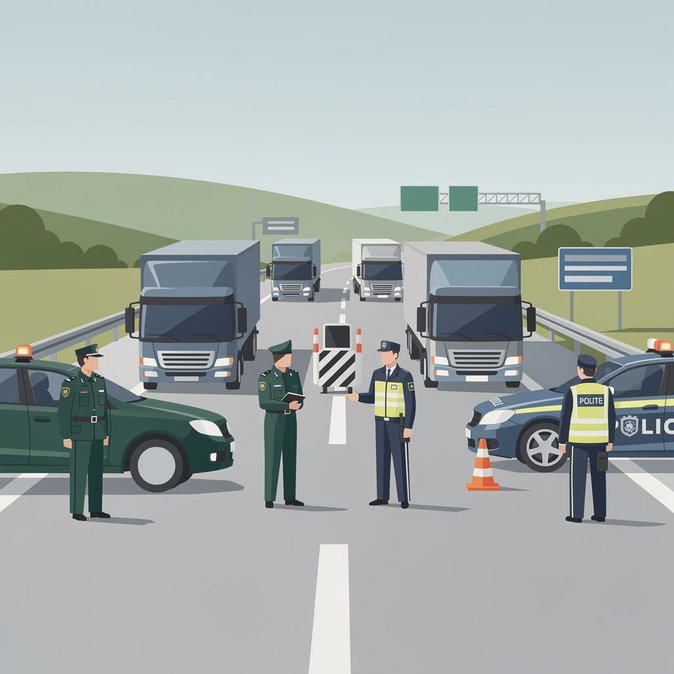
On 10 July senior officers from Poland’s Nadodrzański Border Guard Division met their counterparts from Germany’s Bundespolizei in Alt Madlitz, Brandenburg, for a two-day command-post exercise codenamed “Together Safe”. The drill simulated a coordinated response to human smuggling along the A12 motorway and a drone-delivered contraband drop across the Oder River.
For individuals and companies unsure about the paperwork that can surface during periods of heightened checks, VisaHQ can help. Its Poland portal offers up-to-date guidance on Schengen visas, work permits, and cross-border vehicle documentation, letting travelers and logistics managers sidestep many of the delays rehearsed in “Together Safe.”
Working groups practised real-time data exchange via the EU’s Secure Cloud for Border Services and rehearsed hot-pursuit protocols that allow units to continue a chase 30 km into the neighbour’s territory before handing suspects over. The scenario also integrated customs and fire services to test multi-agency evacuation of a fictitious migrant-stowaway truck fire at the Świecko crossing. The exercise comes as both countries grapple with fluctuating migration flows on the so-called Balkan–Berlin route. Germany has extended its internal Schengen checks until 1 October, while Poland is upgrading ANPR cameras along the Lubusz section. For multinationals running just-in-time logistics between Wielkopolska factories and German distribution centres, the immediate effect will be more random stops on the A2 and A18 corridors over the summer. Officials stressed that legitimate trade will benefit in the long term: lessons learned include faster verification of TIR carnets and a pilot lane for trusted-carrier trucks planned at Świecko by December 2026. Meanwhile, HR managers moving staff between Poznań and Berlin should make sure company vehicles carry physical registration certificates, as digital copies are not yet universally accepted by patrol teams.
For individuals and companies unsure about the paperwork that can surface during periods of heightened checks, VisaHQ can help. Its Poland portal offers up-to-date guidance on Schengen visas, work permits, and cross-border vehicle documentation, letting travelers and logistics managers sidestep many of the delays rehearsed in “Together Safe.”
Working groups practised real-time data exchange via the EU’s Secure Cloud for Border Services and rehearsed hot-pursuit protocols that allow units to continue a chase 30 km into the neighbour’s territory before handing suspects over. The scenario also integrated customs and fire services to test multi-agency evacuation of a fictitious migrant-stowaway truck fire at the Świecko crossing. The exercise comes as both countries grapple with fluctuating migration flows on the so-called Balkan–Berlin route. Germany has extended its internal Schengen checks until 1 October, while Poland is upgrading ANPR cameras along the Lubusz section. For multinationals running just-in-time logistics between Wielkopolska factories and German distribution centres, the immediate effect will be more random stops on the A2 and A18 corridors over the summer. Officials stressed that legitimate trade will benefit in the long term: lessons learned include faster verification of TIR carnets and a pilot lane for trusted-carrier trucks planned at Świecko by December 2026. Meanwhile, HR managers moving staff between Poznań and Berlin should make sure company vehicles carry physical registration certificates, as digital copies are not yet universally accepted by patrol teams.