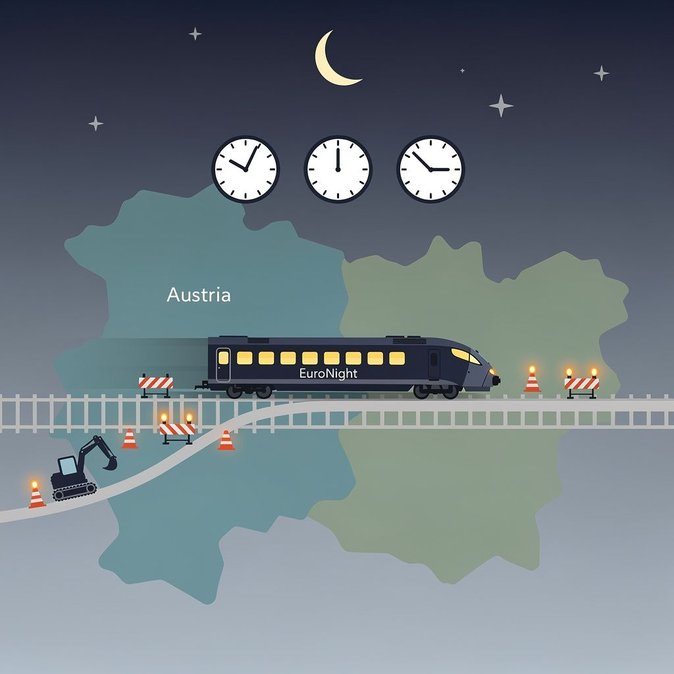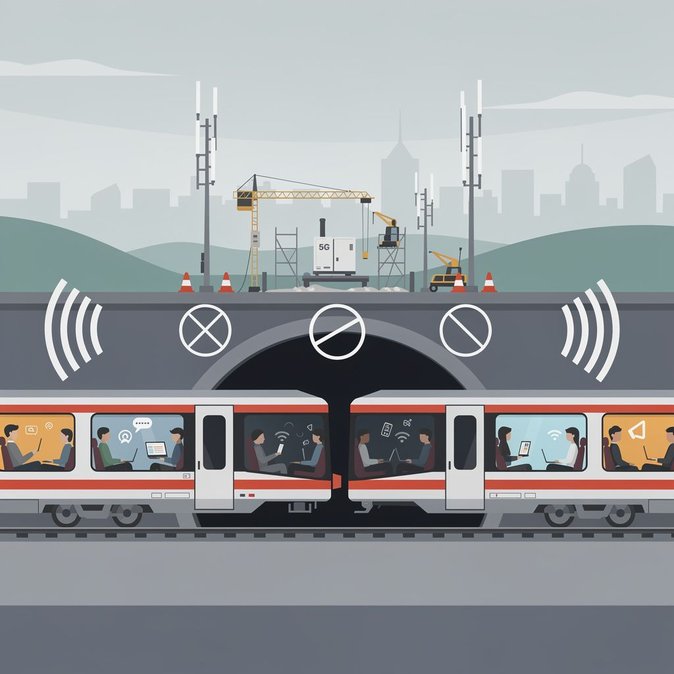
Passengers on Austria’s busiest inter-city rail artery have spent the weekend staring at frozen laptop screens. ÖBB confirmed that a planned 5G retrofit inside the Lainzer, Wienerwald and Atzenbrugg tunnel complexes has required the temporary shutdown of mobile-network repeaters, producing nine-minute ‘dead zones’ on each westbound and eastbound journey between Vienna-Hütteldorf and St Pölten. Magenta and A1, the two largest Austrian carriers, told ORF that signal cut-offs would continue intermittently until 17 July, when technicians finish swapping out legacy 3G/4G antennae for high-capacity 5G arrays robust enough to withstand 250 km/h air pressure. Even voice calls are dropping, leaving many business travellers unable to dial in to Monday-morning conference calls. For employers, the outage undermines one of the key productivity arguments for rail over road or short-haul air. HR departments that reimburse travel time as ‘working time’ may face overtime claims if staff have to complete tasks after arrival. Travel managers are therefore advising mobile-dependent employees to pre-download large files and tether to company VPNs before entering the tunnel segment; ÖBB’s own onboard Wi-Fi uses the same cellular backhaul and is equally affected. ÖBB insists the pain is short-term gain: once live, the new network will support 4 Gbit/s throughput and pave the way for real-time condition-monitoring of the operator’s new Siemens Velaro Nightjet sets. Still, companies with frequent commuters between Vienna HQs and Lower Austrian plants might consider short-term ticketing flexibility or shifting critical meetings to afternoons until full service resumes.
Source: ORF Niederösterreich