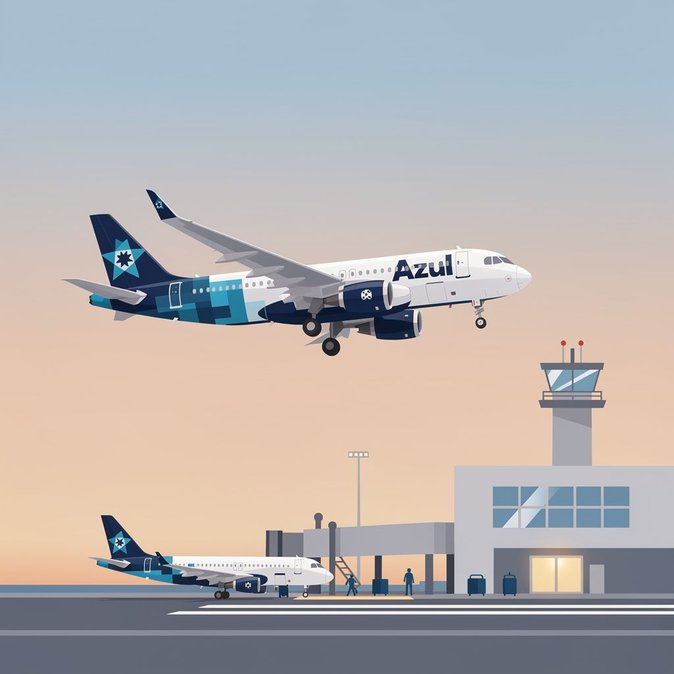
Flight AD-2943 operated by Azul Linhas Aéreas returned to Campinas/Viracopos shortly after take-off on 11 July when cockpit instruments indicated a possible technical anomaly. The Airbus A320neo had been en route to Manaus with 174 passengers and six crew. According to the airline, the crew requested priority landing as a precaution; the aircraft landed safely and was towed for inspection. Azul said no emergency was declared and all customers received meals and hotel vouchers in line with ANAC Resolution 400. A replacement aircraft departed Campinas six hours later and arrived in Manaus within the same calendar day.
At times like these, travellers may also need to adjust their documentation on the fly. VisaHQ’s dedicated Brazil portal enables passengers and corporate travel departments to review the latest visa requirements, submit applications online and receive status alerts, ensuring paperwork doesn’t become another point of friction when journeys are rescheduled.
Maintenance engineers are conducting a root-cause analysis; early indications point to a faulty temperature sensor in one of the engines. For corporate mobility programmes the disruption is a reminder of the limited spare-aircraft capacity on domestic trunk routes during Brazil’s July school-holiday peak. Travel managers are encouraged to build longer connection buffers for itineraries involving the Amazon region, where alternative flights are fewer. The incident also places renewed focus on Viracopos’ role as a contingency hub. The privately operated airport will open a third remote stand in August, increasing its ability to handle unscheduled returns without blocking gates – an upgrade eagerly anticipated by airlines and freight forwarders alike. Insurance providers note that delays of more than four hours now routinely trigger duty-of-care clauses in many mobility policies, obliging multinationals to offer travellers mental-health support and real-time information via mobile apps.
At times like these, travellers may also need to adjust their documentation on the fly. VisaHQ’s dedicated Brazil portal enables passengers and corporate travel departments to review the latest visa requirements, submit applications online and receive status alerts, ensuring paperwork doesn’t become another point of friction when journeys are rescheduled.
Maintenance engineers are conducting a root-cause analysis; early indications point to a faulty temperature sensor in one of the engines. For corporate mobility programmes the disruption is a reminder of the limited spare-aircraft capacity on domestic trunk routes during Brazil’s July school-holiday peak. Travel managers are encouraged to build longer connection buffers for itineraries involving the Amazon region, where alternative flights are fewer. The incident also places renewed focus on Viracopos’ role as a contingency hub. The privately operated airport will open a third remote stand in August, increasing its ability to handle unscheduled returns without blocking gates – an upgrade eagerly anticipated by airlines and freight forwarders alike. Insurance providers note that delays of more than four hours now routinely trigger duty-of-care clauses in many mobility policies, obliging multinationals to offer travellers mental-health support and real-time information via mobile apps.