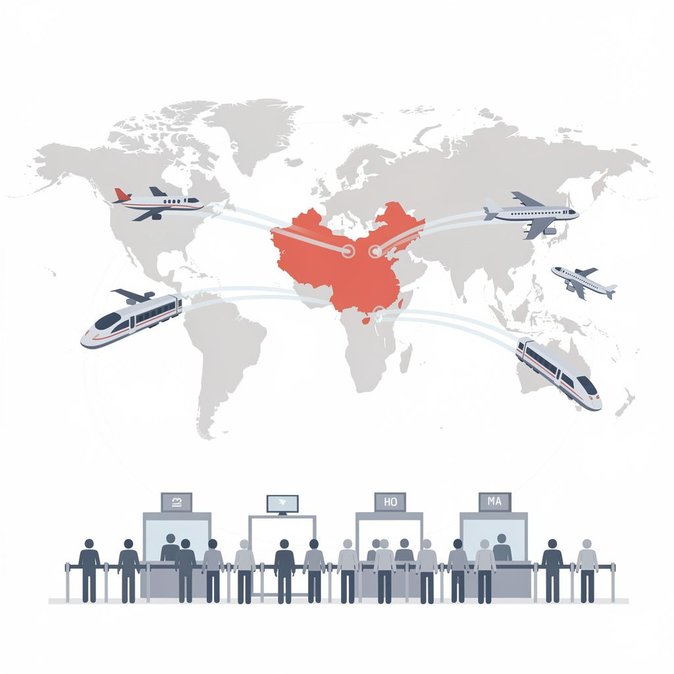
China’s National Immigration Administration (NIA) reported on 12 July that border-inspection stations processed 369 million entries and exits in the first half of 2026, up 10.8 % year-on-year and an all-time high. Of these, 45.9 million were foreign nationals — a 20.6 % jump — and 17.8 million entered visa-free, representing 77.7 % of all foreign arrivals. The surge follows Beijing’s December-2025 decision to grant 30-day visa-free access to citizens of 50 countries and to expand the 240-hour transit-visa waiver to 65 ports nationwide.
For companies and individual travelers trying to make sense of these rapidly changing entry options, VisaHQ can take the guesswork out of the process: its China portal provides up-to-date visa-free eligibility checks, step-by-step work-permit guidance, and concierge document-submission services that can shave days off an application.
NIA officials credited streamlined e-gate processing and the rollout of multilingual mobile-declaration apps for cutting average arrival clearance times by 27 %. For multinationals, the figures signal a sustained rebound of executive visits and short-term project assignments. HR consultancies note that assignment-lead acceptance rates have improved as families perceive China’s border regime as more predictable. However, the rapid growth also strains popular airports such as Beijing Capital and Shenzhen Bao’an, where peak-hour queues are creeping back. Mobility managers should encourage travelers to register passports in advance on the “China Immigration” mini-program to access fast-track lanes and to schedule itinerary buffers during upcoming Golden-Week peaks when daily crossings could exceed three million.
For companies and individual travelers trying to make sense of these rapidly changing entry options, VisaHQ can take the guesswork out of the process: its China portal provides up-to-date visa-free eligibility checks, step-by-step work-permit guidance, and concierge document-submission services that can shave days off an application.
NIA officials credited streamlined e-gate processing and the rollout of multilingual mobile-declaration apps for cutting average arrival clearance times by 27 %. For multinationals, the figures signal a sustained rebound of executive visits and short-term project assignments. HR consultancies note that assignment-lead acceptance rates have improved as families perceive China’s border regime as more predictable. However, the rapid growth also strains popular airports such as Beijing Capital and Shenzhen Bao’an, where peak-hour queues are creeping back. Mobility managers should encourage travelers to register passports in advance on the “China Immigration” mini-program to access fast-track lanes and to schedule itinerary buffers during upcoming Golden-Week peaks when daily crossings could exceed three million.