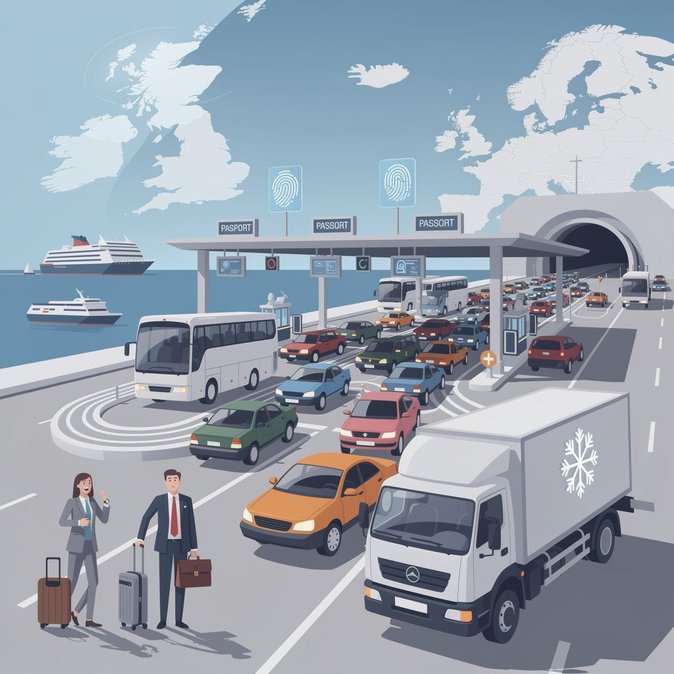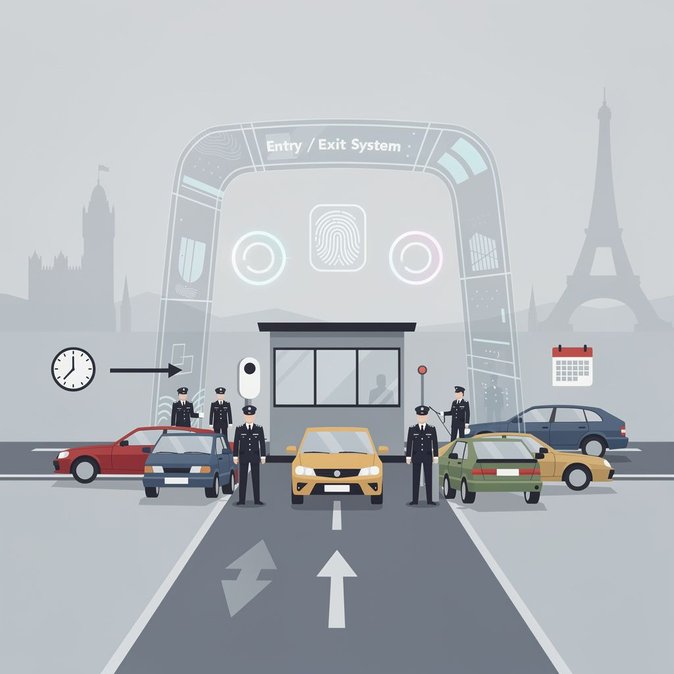
Holidaymakers heading to mainland Europe this month received a rare slice of good news on Sunday when UK transport secretary Heidi Alexander confirmed that Britain and France will jointly deploy hundreds of extra officers at Dover, Folkestone, London St Pancras and the Channel ports of Calais and Dunkirk. The emergency plan – agreed after frantic bilateral talks at the weekend – is designed to stop the new EU Entry/Exit System (EES) from paralysing cross-Channel traffic as the school holidays begin. From April this year every non-EU traveller entering or leaving the Schengen area must provide fingerprints and a facial scan in addition to passport data. Operators say the kiosks supplied by France have proved unreliable, forcing border police to process car passengers manually – a procedure that added up to four-and-a-half hours to Dover departures during the May half-term. With traffic expected to surge by 50 % next weekend, MPs on the Commons home-affairs committee warned of “utter chaos and miles of tailbacks”. Under the deal, France will send an extra 120 officers to work on UK soil and the UK government will release a further £20 million to install additional passport booths and biometric tablets. Coach passengers and freight drivers will also be funnelled into dedicated lanes to minimise disruption. The Department for Transport says the measures should lift booth throughput to 800 cars per hour – roughly double the current rate – but conceded that queues are still likely at peak times until the EU upgrades its biometric kit. For travel-managers and global mobility teams the message is clear: advise staff to build generous buffers into itineraries, encourage rail or air alternatives where possible, and brief travellers on the new fingerprint and photo requirements. Organisations that run group moves or expatriate shuttles across the Channel may also want to review their duty-of-care policies in light of the lengthy roadside waits that are still possible if the technology falters. Longer term, the UK is lobbying Brussels for a reciprocal e-gate deal that would allow British passport-holders to use the automated channels already available to Australian, US and Canadian citizens at major EU airports. Negotiations are continuing but officials admit an agreement is unlikely before the EES becomes fully operational later this year.
Source: The Guardian