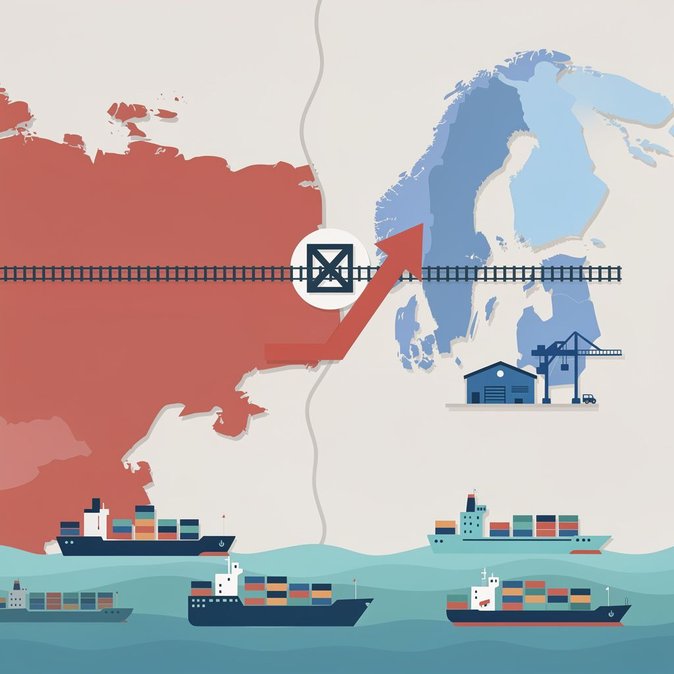
The National Emergency Supply Agency (NESA) issued an unusual Sunday bulletin on 13 July confirming that Russia’s decision to raise freight tariffs on rail cargo destined for Finland—by up to 800 percent—would have “no significant impact” on the country’s security of supply. Moscow’s move, effective 1 July, applies primarily to fertilisers, ammonia and base-metal concentrates that still flow through the lone open crossing at Vainikkala after other border stations were closed for passenger traffic in 2024–2025. According to NESA analysts, Finnish importers have already diversified away from Russian suppliers since the invasion of Ukraine. Domestically produced fertilisers now cover roughly 85 percent of agricultural demand, and nickel or battery-grade raw materials can be sourced from Canada, Indonesia and Australia. Logistics operators have re-routed most east-bound cargo to maritime corridors via Baltic ports, softening the blow from higher rail costs. Nevertheless, the agency warned that shippers who still rely on the Vainikkala corridor may see cost increases of €10–15 per tonne, eroding margins and hastening the shift to sea freight. Port operators in Kotka, Hamina and Rauma anticipate modest volume gains as a result, while rail-services provider VR Transpoint said it would review its wagon allocation to Russia later this quarter. From a mobility-management standpoint, corporate supply-chain teams should update contingency plans to reflect the near-closure of the eastern rail gateway. Staff movements remain minimal—passenger services over the land border are still suspended—but project personnel requiring travel to Russian sites are now almost fully dependent on flights via Istanbul or the South Caucasus. Companies should also watch fertiliser prices: industry analysts see a potential 5–7 percent uptick for the 2027 growing season if Russian product disappears entirely.