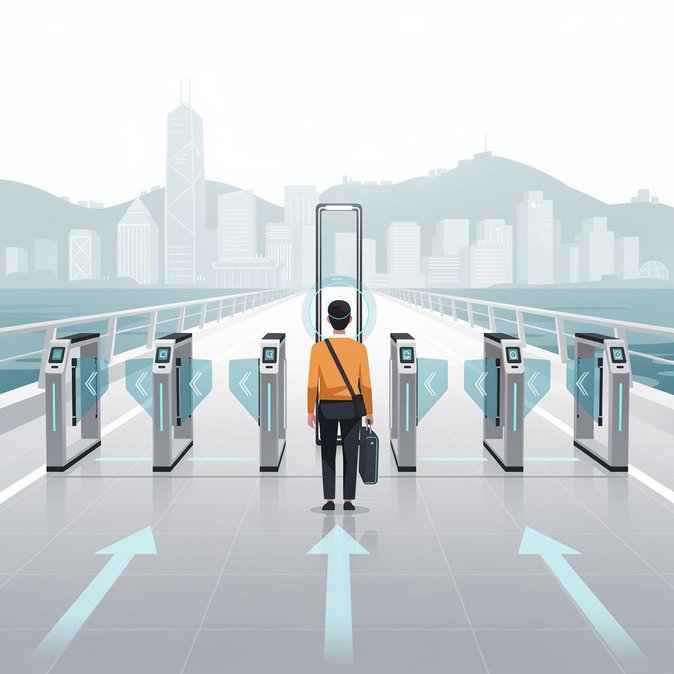
A new "Seamless e-Channel" went live on 25 June and was highlighted again on 14 July by mobility publication Zagdim Overseas. Located in the departure hall of the Hong Kong Port of the Hong Kong-Zhuhai-Macao Bridge (HZMB), the lane allows eligible Hong Kong permanent residents who have crossed the bridge at least ten times in the preceding 90 days to clear departure formalities using facial recognition alone—no need to insert an ID card or scan a passport. The pilot is Hong Kong’s first contactless clearance channel for land departures and fulfils a pledge in the 2025 Policy Address to test “seamless travel” technology. Authorities emphasise that the service is strictly opt-in: only residents aged 11 or above holding a smart ID card and meeting the crossing-frequency threshold will be auto-enrolled. Arrival processing on the Hong Kong side, as well as clearance on the Zhuhai/Macao ends, remains unchanged. Cross-border families, Macau-based casino staff who commute daily, and executives overseeing factories in Zhuhai stand to gain the most, as the new gate reduces typical departure processing to under 20 seconds. HR teams managing such commuters should update travel handbooks to clarify that smart ID cards must still be carried and presented on request. The Immigration Department will monitor usage statistics for three months before deciding whether to extend seamless clearance to the arrival hall and to other control points such as Shenzhen Bay. If adoption is high, officials hinted that the technology could be integrated with the city’s "iAM Smart" digital identity platform, opening the door to mobile boarding passes and fully contactless multimodal journeys. Travellers who do not meet the frequency requirement—or who travel on foreign passports—must continue to use conventional e-Channels or manned counters, so companies with diverse workforces should maintain dual procedures during the transition.
Source: Zagdim Overseas