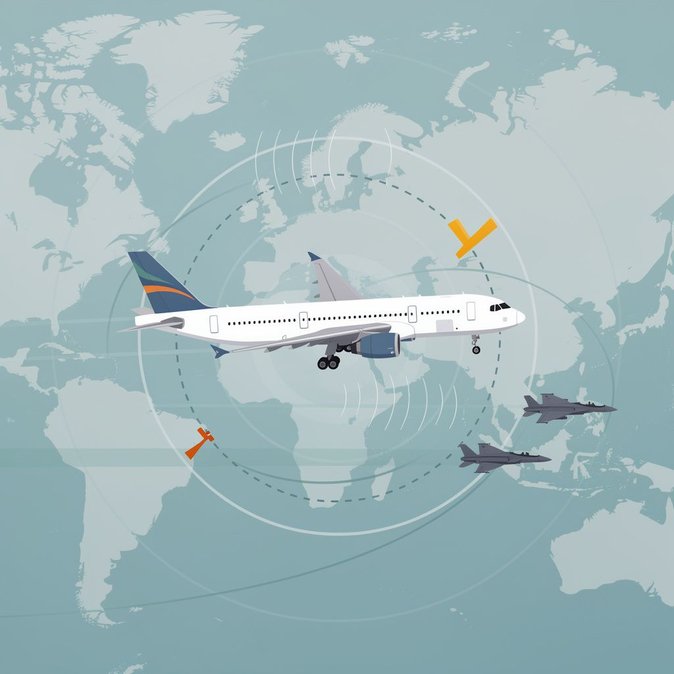
China Travel News reported on 14 July that a Cathay Pacific Airbus A350 flying Hong Kong–London temporarily lost radio contact over Romanian airspace on 4 July, prompting NATO’s Quick Reaction Alert to dispatch Hungarian fighter jets. Although communications were restored within minutes and the flight landed safely at Heathrow, the incident has spurred Hong Kong’s Civil Aviation Department (CAD) to order an internal review of long-haul cockpit protocols. Preliminary data show the aircraft’s transponder continued to broadcast its position, but both VHF and HF channels went unanswered for nearly nine minutes—a threshold that automatically triggers military interception under Eurocontrol guidelines. Industry analysts note that cockpit workload spikes during route-change briefings may coincide with scheduled ATC hand-offs, creating windows for missed calls. Cathay Pacific has already reminded crews to segregate duties so that at least one pilot continuously monitors the primary ATC frequency during hand-offs and to use CPDLC (Controller–Pilot Data Link Communications) as a redundancy. The airline is also accelerating installation of a new satellite-based voice-over-IP system that maintains contact even when flying beyond traditional radio ranges. For travel managers, the episode highlights the importance of monitoring en-route disruption alerts. A temporary loss of contact can lead to diversions that jeopardise meeting schedules or cargo connections; organisations should ensure their duty-of-care platforms ingest real-time flight-tracking feeds and push notifications to mobile travellers. The CAD said it will share findings with the European Union Aviation Safety Agency and the UK Civil Aviation Authority, and that no regulatory breaches have been identified so far. Still, experts predict new guidance on crew resource management for ultra-long-haul flights will emerge within months.
Source: China Travel News