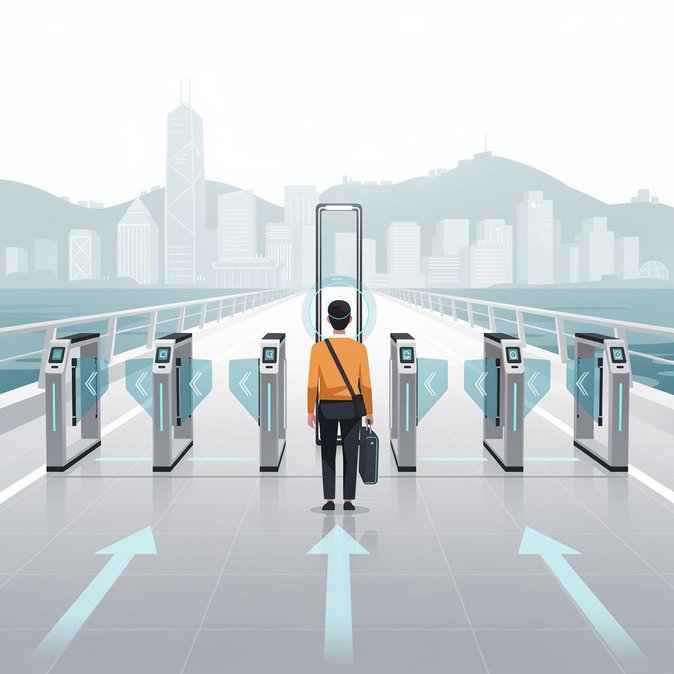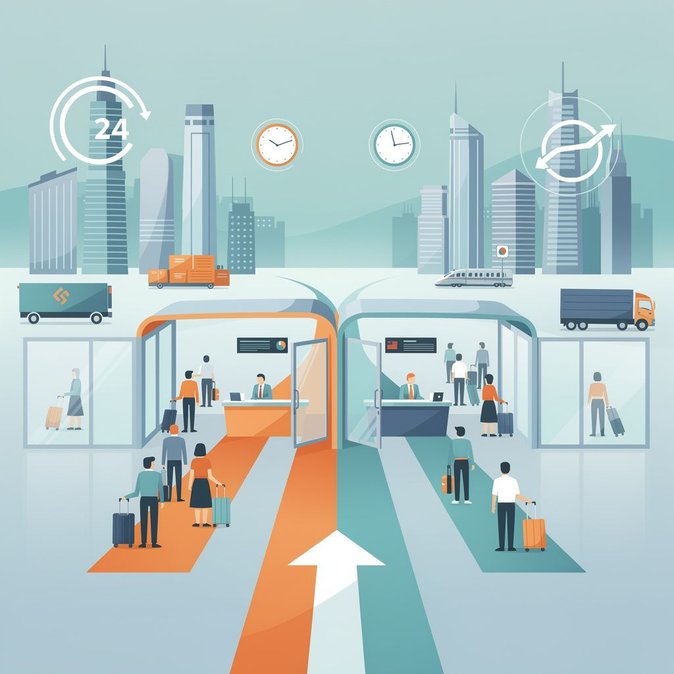
The Hong Kong Special Administrative Region Government on 14 July tabled the Huanggang Port Hong Kong Port Area Bill in the Government Gazette, launching the legislative process that will allow Hong Kong and Shenzhen to introduce a full “co-location” immigration model at the redeveloped Huanggang Port. Under the bill, a portion of the new passenger terminal on the Shenzhen side will be designated as the “Hong Kong Port Area”, placing it under Hong Kong jurisdiction for immigration, customs and quarantine purposes. Travellers will present only the travel document required for their destination and complete both Hong Kong and Mainland clearance at the same counter, a move officials say will slash average processing time from 30 minutes to about five. The legislation implements a June 2026 decision of the National People’s Congress Standing Committee authorising Hong Kong to exercise jurisdiction in the port area; it must be passed before the new facility can open. The Security Bureau confirmed that the first and second readings will be taken up by the Legislative Council tomorrow, an accelerated timetable designed to meet Beijing’s requirement that the port start operations on 31 July. Business groups have welcomed the co-location arrangement. Manufacturers in the northern New Territories say the current Lok Ma Chau shuttle adds unpredictable delays that hurt just-in-time supply chains; they expect the new system to cut labour costs and allow cross-border staff to schedule same-day factory and client visits more reliably. Logistics firms note that Huanggang will become the first 24-hour passenger control point on the Hong Kong–Shenzhen corridor, giving air-cargo couriers a round-the-clock land option to Shenzhen’s high-tech cluster. Practical implications for mobility managers are significant. Companies should update staff travel policies to include the single-checkpoint process (for both arrival and departure) and revise contingency plans for the eventual closure of the old Huanggang shuttle terminal. HR teams handling commuter assignments will want to brief employees on the new e-gates and contactless kiosks that will be installed during the July testing period. Although fees have not been announced, officials hint that the clearance model will rely heavily on biometric smart-ID cards rather than paper landing slips, making timely ID-card renewals essential.
Source: South China Morning Post