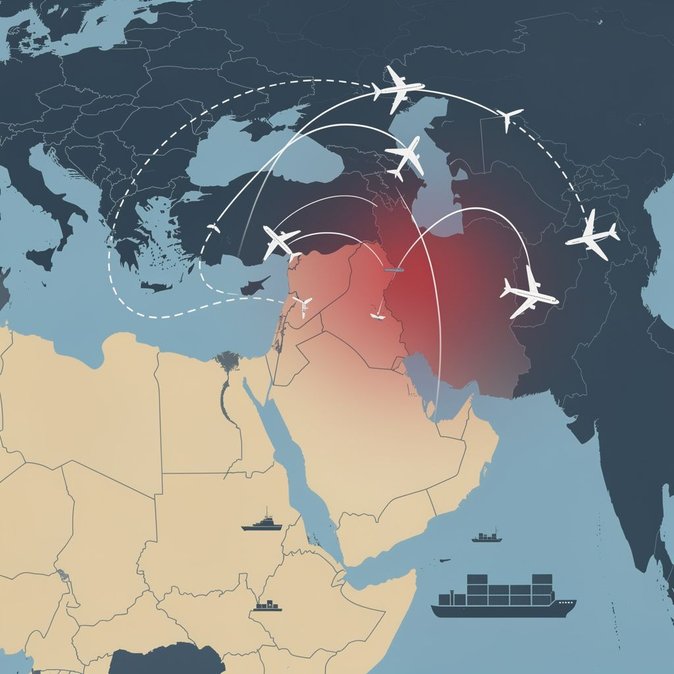
The European Union Aviation Safety Agency (EASA) issued a Conflict-Zone Information Bulletin (CZIB) on July 14 advising EU airlines to steer clear of the airspace of the UAE, Qatar, Bahrain and Kuwait — as well as the western Gulf of Oman — until at least July 29. The notice cites “high risk to civil aviation” tied to renewed U.S.–Iran military clashes, naval blockades and drone activity that could misidentify commercial flights. Although the directive is aimed at European carriers, U.S. airlines with codeshare partners and cargo operations in Dubai and Doha will feel the ripple effects through schedule changes, longer routings and potential slot disruptions at U.S. hubs. Delta’s joint-venture partner Air France has already rerouted Paris-Dubai flights via Egypt, adding up to 40 minutes each way. The warning follows President Trump’s July 13 pledge to reinstate a naval blockade of Iranian ports and the earlier U.S. move to charge a 20 percent toll on cargo transiting the Strait of Hormuz—later replaced by “trade deals,” according to administration statements. Elevated military posture raises the possibility of anti-aircraft fire, GPS jamming and debris hazards. Travel-management companies report a surge in corporate queries on the viability of connecting itineraries through the Gulf. Employers with mobility programs in Saudi Arabia and the UAE are revisiting split-routing strategies via Muscat or Jeddah and considering premium-class allocations to offset longer flight times. Risk consultants urge U.S. travelers to maintain flexible tickets, register with the STEP program and monitor carrier alerts. Companies should update contingency plans for medical evacuation, as over-flight diversions could limit access to Gulf airports during a sudden closure.
Source: Gulf News