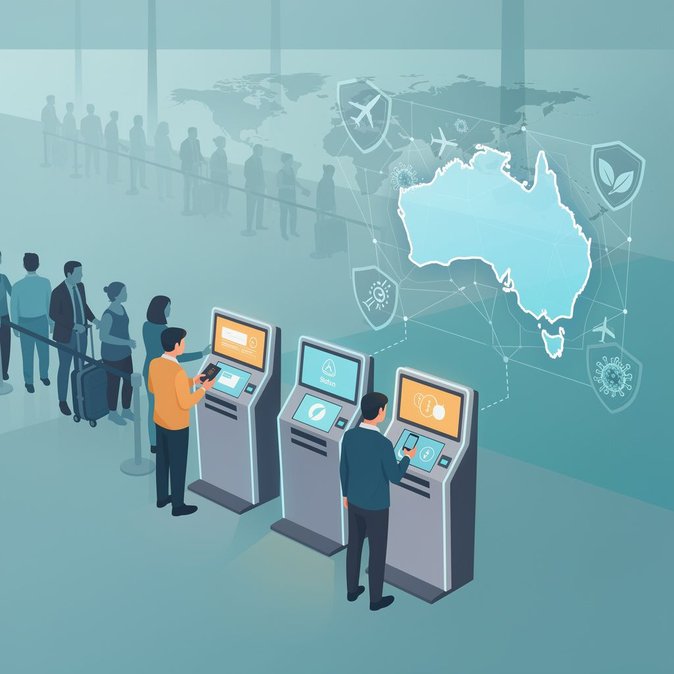
Tourism and Trade Minister Don Farrell has revealed fresh budget details behind Australia’s digital border modernisation. Speaking to Newsreel on 15 July 2026, Senator Farrell confirmed that A$56.1 million has been set aside to upgrade airport infrastructure so that every terminal can process the Australia Travel Declaration (ATD). The funding will finance additional biometric kiosks, Wi-Fi upgrades and integration layers connecting airline apps to the Department of Home Affairs risk-analysis platform. During the two-year Qantas-led pilot, the ATD captured health and bio-security information up to 72 hours before departure, allowing officials to triage high-risk arrivals and waive low-risk passengers straight to SmartGates. Industry bodies such as the Australian Chamber of Commerce and Industry and the Tourism & Transport Forum have long lobbied for a digital arrival card, arguing that rivals like Singapore and Dubai already provide frictionless e-arrival processes that appeal to time-poor executives. Farrell says the investment will “make Australia an even easier and more welcoming place to visit”, predicting a 30 per cent reduction in average queuing times once the system is fully deployed. Beyond passenger convenience, the project is pitched as a security and data play: structured, machine-readable declarations feed directly into Home Affairs’ intelligence systems, allowing rapid re-screening when new disease outbreaks or sanctions lists emerge. Corporations will benefit from automated compliance feeds into travel-booking tools, reducing the manual paperwork burden that often delays expatriate assignments. The ATD upgrade dovetails with longer-term plans for a biometric ‘seamless traveller’ model outlined in last year’s Digital Border Strategy, which envisions combined visa, customs and bio-security clearance via facial recognition by 2030.
Source: Newsreel