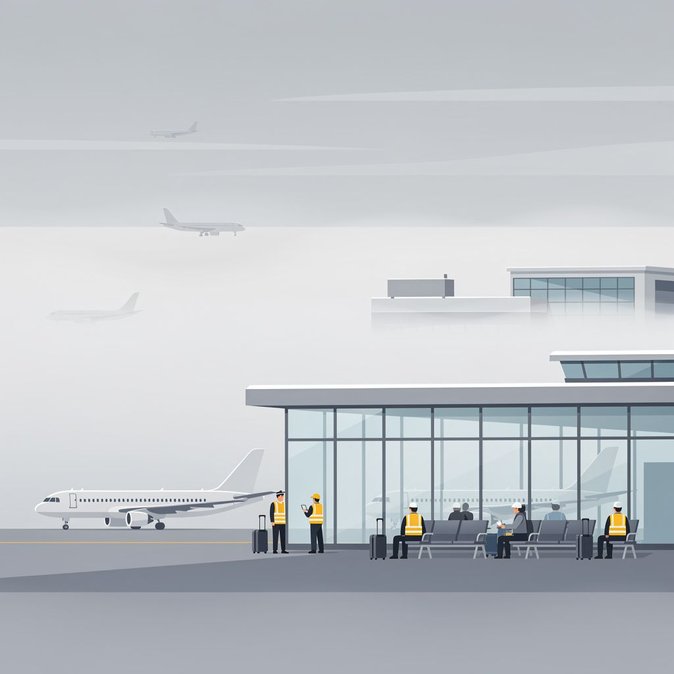
A blanket of heavy winter fog disrupted operations at Adelaide Airport on the morning of 15 July, forcing three inbound Qantas and Jetstar services to divert to Melbourne, delaying a further half-dozen domestic and international flights and creating knock-on effects for connecting business travellers across Australia. Airport spokesperson Sarah Lindholm said visibility dropped below minimums shortly after dawn, prompting air-traffic controllers to place arriving aircraft into holding patterns and eventually redirect the worst-affected flights to Melbourne for refuelling. Two wide-body flights from Malaysia Airlines and Singapore Airlines spent roughly 30 minutes circling over Yorke Peninsula before conditions improved sufficiently to land safely. Departing services to Sydney and Brisbane were also held back, with some passengers reporting delays of up to four hours. The Bureau of Meteorology attributed the fog to a stubborn high-pressure system trapping moist night-time air over Adelaide’s western suburbs. Senior forecaster Tom Anderson warned that similar conditions could return over the next 48 hours. Airlines have waived change fees for affected customers and urged travellers to monitor mobile apps and SMS alerts rather than rely on terminal display boards, which struggled to keep pace with rapid schedule changes. For corporate mobility managers the event is a timely reminder that mid-winter radiation fog in southern Australia can paralyse tightly-timed schedules. Companies with fly-in-fly-out (FIFO) staff to South Australia’s mining regions were forced to reorganise ground transfers when connections through Adelaide were missed. Travel risk advisers recommend building longer connection windows into July itineraries, particularly for passengers linking onward to regional charter services that offer fewer daily frequencies. Although the disruption eased by late morning, experts say the incident highlights the cascading operational risk posed by even short-lived weather events at single-runway airports. Aviation analyst Neil Hansford noted that Adelaide’s growing international network—more than 800,000 overseas seats are scheduled this quarter—is making contingency planning for fog and storm diversions increasingly critical for both airlines and corporate travellers.
Source: ABC News