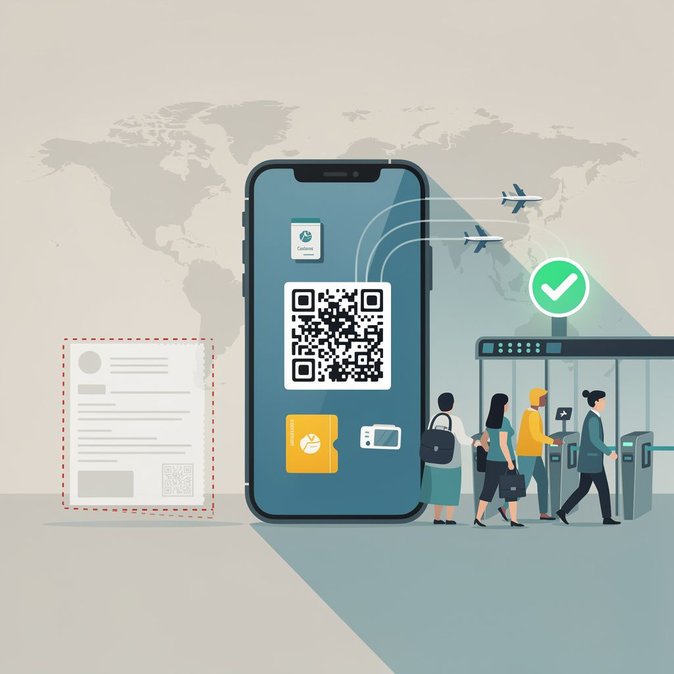
In the most significant upgrade to Australia’s border-processing system in two decades, the federal government confirmed on 16 July 2026 that the paper-based Incoming Passenger Card will be retired in favour of a fully digital ‘Australia Travel Declaration’ (ATD) to be used at every international airport and seaport. Built around QR-code technology already trialled with Qantas on selected flights into Brisbane, Sydney and Melbourne, the ATD will let travellers submit passport details, customs and bio-security declarations, and Covid vaccination or health data up to 72 hours before departure. According to Home Affairs, the initiative is backed by a $56.1 million budget allocation that also funds contactless e-gates, streamlined domestic-transfer baggage handling and co-located domestic/international terminal models. The move ends the ritual of filling out orange cards mid-flight and is expected to cut average clearance times by 30 %, helping airlines turn aircraft faster while giving business travellers a smoother, self-service path from gate to kerb. The ATD will initially live in a stand-alone app and webform before being embedded in airline apps; government sources say all Qantas-group airlines will migrate first, followed by Virgin Australia and major foreign carriers. For corporate mobility managers, the digital card means real-time data feeds: duty-of-care platforms will be able to confirm an employee’s arrival the moment the ATD is processed, and travel insurers can pre-populate policy numbers to speed claims. Travellers arriving without an ATD will still be able to use a transitional paper card until mid-2027, but border officials warn of “longer queues” for the manual line. Australia’s shift mirrors moves in Singapore and the United States and is part of a broader push to make the border ‘digital by default’. Privacy advocates welcomed the decision to store ATD data in Australia under the Privacy Act; airlines, meanwhile, say the change will make multi-sector itineraries easier to sell by removing a layer of paperwork. With visitor and international student volumes forecast to exceed pre-pandemic levels by early 2027, business chambers argue the ATD is critical infrastructure. “The new digital process directly supports trade, tourism and skilled-talent flows,” said Business Council chief executive Bran Black. Industry groups are urging the government to release the technical API swiftly so travel-management companies can start integration testing before this year’s peak northern-winter season.