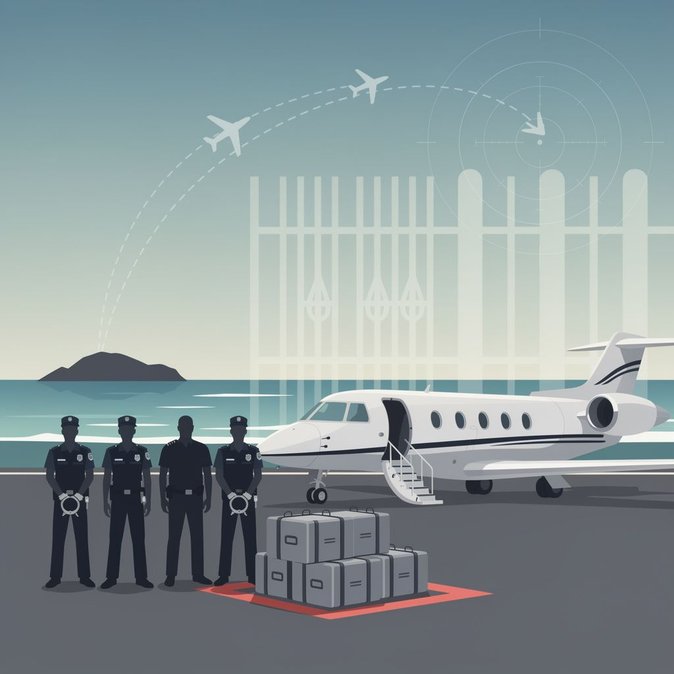
Three members of a Melbourne-based organised-crime cell have been sentenced to a combined 54 years in prison for attempting to fly half a tonne of cocaine into northern Queensland on a ‘black flight’ that crashed in Papua New Guinea in 2020. The joint media release issued on 16 July details how the Australian Federal Police, Queensland Police, Victoria Police, Australian Border Force, ACIC and the Royal Papua New Guinea Constabulary spent six years piecing together Operation Weathers before finally securing convictions. The cocaine—worth an estimated A$800 million—was destroyed under court order in 2024, but the intricate investigation continued as authorities tracked money flows, encrypted messages and aviation-fuel purchases that linked the gang to Italian organised crime. On Thursday a Victorian man (39) received 22 years (13-year non-parole), a Maribyrnong man (37) received 21 years (12-year non-parole) and a Liverpool, NSW man (42) received seven years. A fourth conspirator had already been jailed in March. For Australian border agencies, the case showcases the growing use of remote airstrips, light aircraft and cross-border logistics networks to bypass seaports. ABF’s aviation security branch says it is now deploying additional surveillance drones, satellite tracking and cooperation with PNG aviation authorities to identify unregistered charter flights heading toward Cape York and the Torres Strait. Global-mobility and security managers should note that law-enforcement presence at regional airfields is expected to increase, potentially causing random inspections and delays for legitimate corporate charter movements—particularly in mining and energy sectors operating in Far North Queensland. Companies moving specialist staff or high-value cargo by private aircraft should build extra lead-time into itineraries and ensure cargo and passenger manifests are complete and accurate.