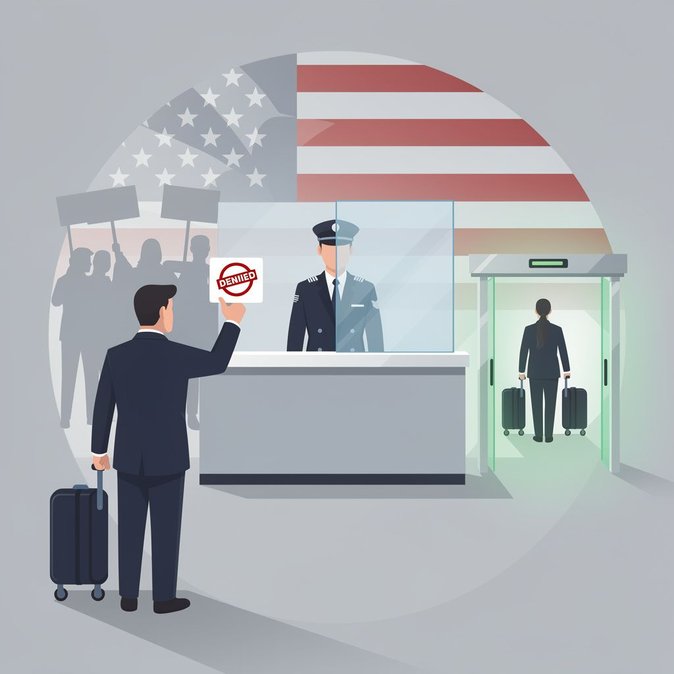
Secretary of State Marco Rubio has rolled out a targeted visa-restriction policy aimed at foreign nationals who “finance, recruit, incite or otherwise enable” violence by far-left extremist groups. Announced 17 July at a ministerial on political terrorism attended by delegates from 67 countries, the measure invokes Immigration and Nationality Act §212(a)(3)(C) to deny U.S. entry on foreign-policy grounds. The Department says the policy responds to a transnational rise in ideologically motivated sabotage, bombings and cyber-attacks against infrastructure and private enterprise. While right-wing and Islamist extremism have long dominated counter-terrorism policy, officials argue that far-left networks exploit gaps in global law-enforcement cooperation. The visa ban covers financiers, logisticians, on-line recruiters and even propagandists, and it can be applied retroactively to revoke existing visas. Consular officers are instructed to utilise open-source intelligence and allied security-service reports when adjudicating cases. For multinational companies, especially those in energy, defence, transportation and critical tech, the policy adds another security-based screening layer for visiting vendors, researchers and conference speakers. Travel managers should anticipate additional administrative processing (“221 (g) holds”) for applicants connected—sometimes tangentially—to activism or protest movements deemed radical. Public-affairs teams may also need crisis-communication plans if employees or partners are denied visas under the new rubric. Rubio signalled that similar designations targeting eco-terror and militant anarchist networks are under review, suggesting a broader shift toward ideology-agnostic counter-terror visa policy.
Source: Gulf News