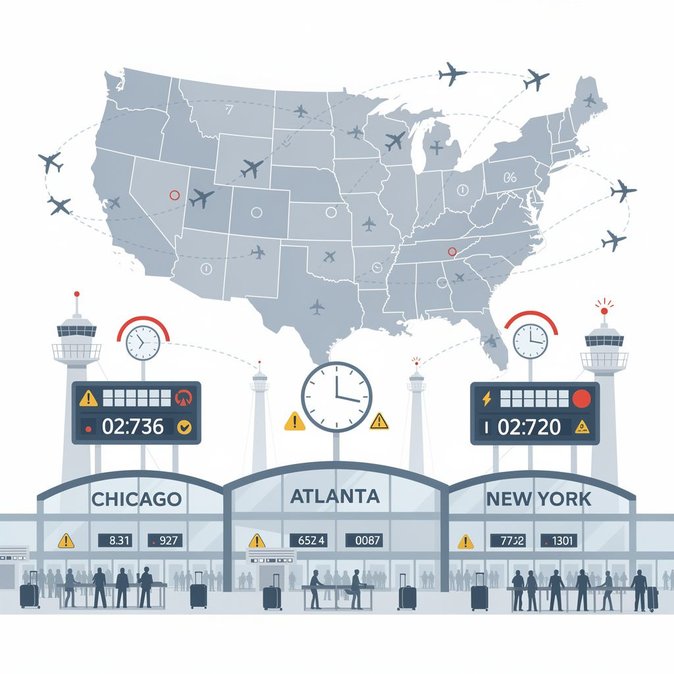
The Federal Aviation Administration’s National Airspace System dashboard showed an average delay of 45 minutes across major U.S. hubs on the morning of July 17, reflecting unprecedented summer passenger volume and lingering staffing gaps. The heaviest congestion was recorded at Chicago O’Hare, Atlanta Hartsfield-Jackson and New York JFK, each exceeding one-hour departure backlogs. TSA throughput data indicate the agency screened 2.93 million travelers on July 16—the highest single-day count ever recorded, outpacing pre-pandemic 2019 by seven percent. Airlines attribute the surge to post-pandemic corporate travel rebound and fans heading to FIFA World Cup matches. Labor shortages remain acute: the FAA’s controller workforce stands at roughly 10,600—about 1,400 short of the agency’s own target for 2026. A January federal hiring freeze and extended academy training pipeline mean relief is unlikely before 2027. For global-mobility planners, the macro-delay pattern translates into higher missed-connection risk for inbound talent and relocating employees. Some companies are shifting project kickoff dates by a day to accommodate likely travel hiccups and advising VIP travelers to book first-bank flights before 8 a.m., historically less delay-prone. Travel managers should monitor the NAS dashboard during critical move dates and build contractual flexibility into relocation packages, including refundable fares and hotel contingencies.
Source: FAA National Airspace System