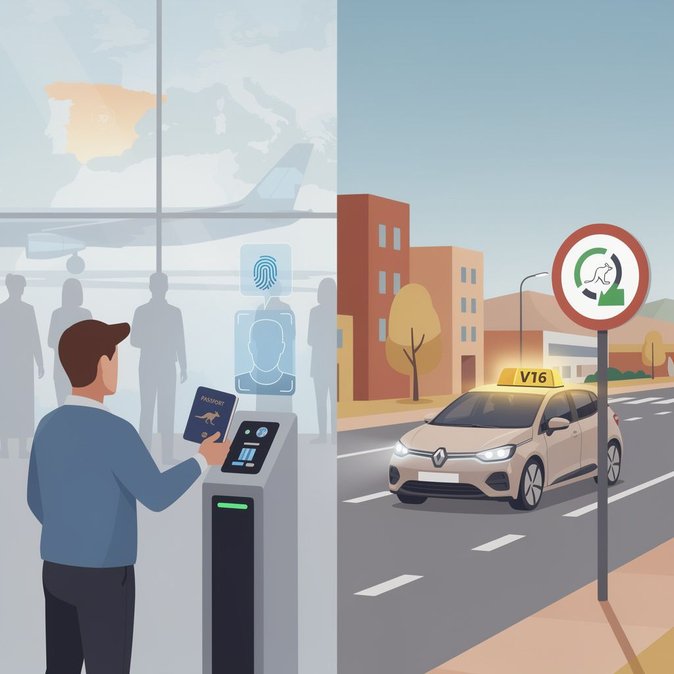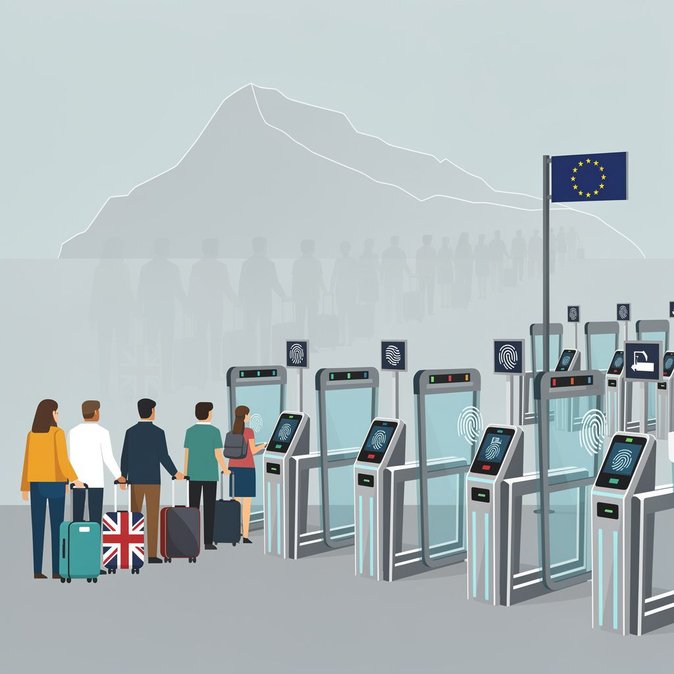
Spain’s Ministry of the Interior has authorised an emergency deployment of additional biometric kiosks for the EU Entry-Exit System (EES) at Gibraltar Airport after the first three days of live operation revealed long queues and intermittent software failures. Since 15 July, when the new EU–UK Treaty on Gibraltar entered provisional force, the land fence at La Línea has disappeared and all Schengen border checks have been transferred to the airport terminal, where Spanish National Police officers now work side-by-side with Gibraltar’s Borders & Coastguard Agency. According to Chief Minister Fabián Picardo, only four EES posts—three for arrivals and one for departures—were initially installed. With every third-country passenger obliged to provide four fingerprints and a facial scan, capacity proved insufficient, generating waits of up to two hours on peak London flights. From Saturday night, contractors will double the number of e-gates and add five portable enrollment units for manual back-up. A software patch will also correct an incompatibility that prevented the system from reading Gibraltar Civilian Registration Cards, a problem that forced residents into the general queue. Spanish police unions complained that the shortage of equipment and the lack of passenger manifests prevented officers from carrying out risk-based screening and created security blind spots inside the joint control zone. The Interior Ministry said the new kiosks, together with dedicated access for officers and real-time data sharing with Gibraltar authorities, should restore normal processing times before the holiday rush next week. For business travellers, the incident offers a glimpse of Europe’s biometric future. Once fully rolled out in 2026-27, EES will replace passport stamping at all external Schengen borders, recording each entry and exit and automatically flagging overstayers. Companies sending staff through Gibraltar—now effectively an external Schengen frontier—should brief travellers to allow extra time, carry residence documents, and prepare for fingerprints at every crossing until the system stabilises.
Source: Europa Sur