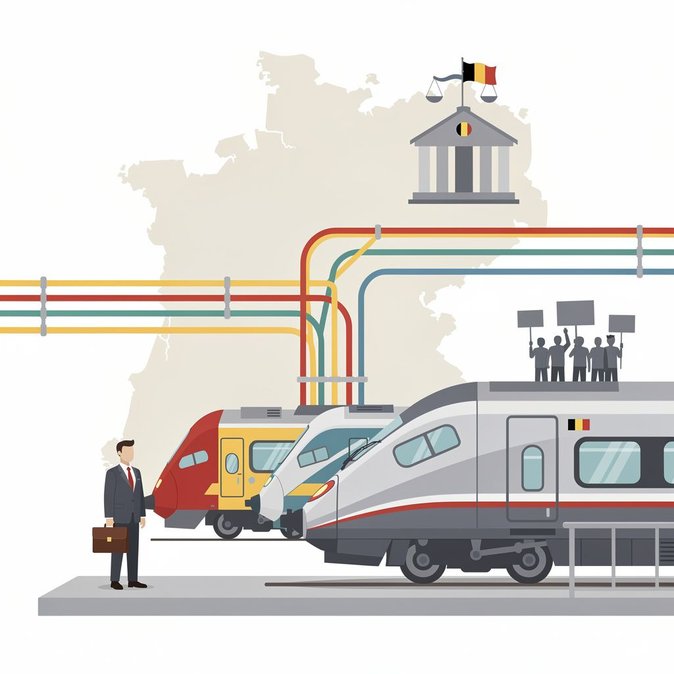
Also at its 18 July 2026 meeting, the Belgian cabinet approved a strategic note from Mobility Minister Jean-Luc Crucke that sketches how Belgium will open its domestic passenger-rail services to competition once the current public-service contract with state operator SNCB expires in 2032. The document fulfils EU Fourth Railway Package obligations and mirrors liberalisation moves already under way in neighbouring France and the Netherlands. Key elements include a staggered tendering calendar in which specific inter-city and regional routes will be bundled and put out to open competition, while a residual ‘sunset’ contract will be granted directly to SNCB for routes not yet ready for market. A new federal rail authority will design timetables, run tenders and enforce ticketing and tariff interoperability so that travellers—particularly cross-border commuters—can switch seamlessly between operators. For multinationals with Belgian hubs, the reform promises more frequent services on business-critical corridors such as Brussels–Antwerp and Brussels–Liège, potentially lowering reliance on company cars. Yet unions have already flagged concerns about job security and a possible race to the bottom on staffing levels. The government says social clauses will be embedded in tender documents, and that the first pilot contracts will not start until 2029, giving SNCB time to adjust. Infrastructure manager Infrabel, meanwhile, must coordinate with regional transport companies and with Dutch and French counterparts to protect cross-border paths, a priority for companies whose assignees commute daily from Maastricht or Lille. Detailed legislation will return to the cabinet by mid-2027, but mobility managers should start factoring more diverse rail suppliers—and potentially keener pricing—into their travel policies.
Source: News.belgium