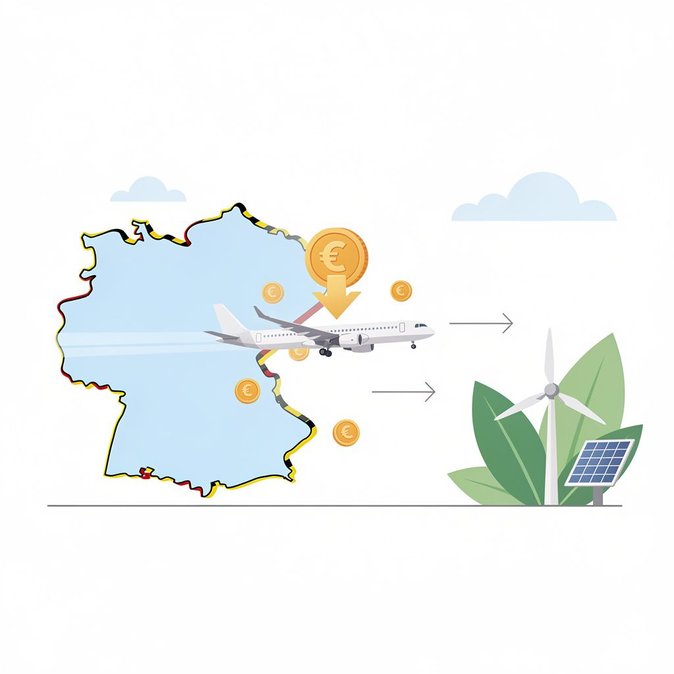
Belgium’s federal core cabinet concluded an all-night negotiating session in Brussels on 18 July with an agreement that directly affects anyone flying into or out of the country. Ministers decided **not** to raise the so-called “embarkation tax” (flight tax) on medium- and long-haul tickets to the €10 that had been floated earlier this year, opting instead for a more modest €7 surcharge on journeys over 500 km. Short-haul flights (under 500 km) will continue to attract the €2 tax that was introduced in 2022, while transfer passengers and infants remain exempt. The compromise comes after weeks of lobbying by Brussels Airport, the Belgian Travel Confederation and several multinational employers headquartered in the capital, all of whom argued that a sharper hike would make Belgium less attractive as a hub for corporate travel and expatriate assignments. According to the Ministry of Finance, the €7 rate will still generate roughly €54 million a year—money earmarked for rail-and-bus improvements that connect regional cities such as Ghent, Antwerp and Liège with the national airport. From a global-mobility perspective, the decision offers companies welcome cost certainty as they budget for 2027 travel and assignment programmes. A Deloitte Belgium impact note circulated to clients on Saturday estimates that, for a typical long-haul return ticket purchased in Brussels for an assignee relocating to New York, the tax component will increase by €10 rather than €20, saving employers about €600,000 a year across large mobility programmes. The government also confirmed that the levy will be collected automatically by airlines at point of sale, removing the administrative burden on travellers. Employers should, however, be aware of the political signal: Deputy Prime-Minister Petra De Sutter emphasised that the tax is designed to “nudge” travellers toward lower-carbon alternatives for journeys within 700 km, such as the high-speed Thalys, Eurostar and ICE rail networks. Mobility managers should therefore continue to encourage rail over air for trips to Paris, Amsterdam, Frankfurt and Cologne, where travel time is already competitive. Finally, the cabinet hinted that a full review of Belgium’s wider aviation tax regime—including possible exemptions for Sustainable Aviation Fuel (SAF) flights—will begin in early 2027.
Source: The Brussels Times