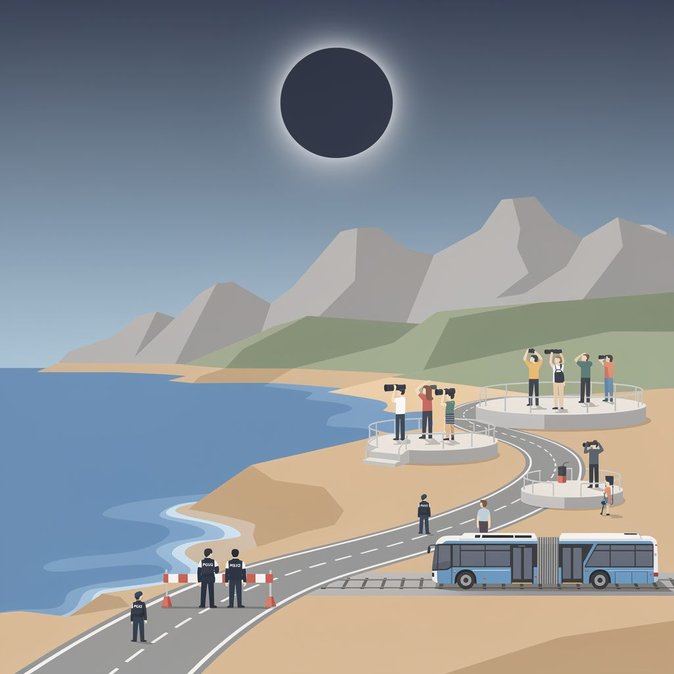
The Balearic Islands’ government has taken the unprecedented step of banning all visitor access to the UNESCO-listed Serra de Tramuntana between 15:00 and 21:00 on 12 August, the afternoon when a total solar eclipse will plunge the western Mediterranean into darkness for 96 seconds. Officials fear that an uncontrolled influx of eclipse-chasers could overwhelm the island’s overstretched road network, emergency services and fire-prevention resources at the height of an already record-breaking summer season. The decision follows mounting pressure from local environmental groups such as “Menys Turisme, Més Vida,” which has called a demonstration on 26 July under the slogan “Mallorca, al límit.” Activists argue that Mallorca’s 2 million peak-season visitors already exceed the carrying capacity of its fragile mountain ecosystem and that the eclipse could trigger dangerous crowding at cliff-edge viewpoints. To spread demand, the regional Executive has published an official list of 26 alternative viewing sites spread across Mallorca, Menorca, Ibiza and Formentera—each capped at 300,000 spectators combined. Extra ferry rotations and shuttle buses are being chartered, while hoteliers have agreed to stagger check-out times to avoid the traffic spikes that normally accompany mass departures after major events. For businesses, the clamp-down is a double-edged sword. Tour operators that have marketed “eclipse packages” must now reroute customers or risk refunds, yet the policy also offers clarity that allows them to plan logistics and obtain the permits needed for organised excursions. Resident companies that supply goods to the Serra’s villages have been granted special transit passes, but delivery windows will be tightly policed. The Balearic move will be closely watched by other Spanish regions expecting eclipse traffic, such as Aragón and Castilla-La Mancha. Mobility managers in mainland Spain told EL PAÍS they may replicate the “selective closure plus authorised corridors” model if crowd-prediction data indicate similar saturation risks.
Source: El País