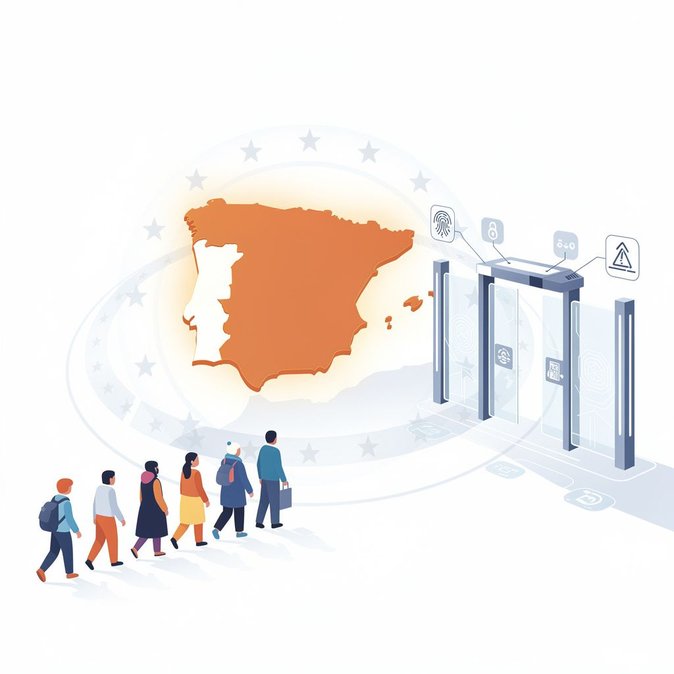
The European Migration Network (EMN) released its annual Asylum and Migration Overview on 20 July, mapping key policy shifts across the EU in 2025. Spain features prominently thanks to last year’s extraordinary regularisation programme, which attracted 1.17 million applications before closing on 30 June 2026. According to the EMN, Spain’s initiative – the largest single-country regularisation in the EU since Italy’s 2009 amnesty – could serve as a case study for managed pathways. Brussels officials note that processing-capacity upgrades, end-to-end digital filing and partnerships with lawyers’ associations helped Spain finalise almost 600,000 decisions within nine months. The report also flags Spain’s early roll-out of the EU Entry/Exit System (EES) at Algeciras, which handled 646,000 passengers during the first month of the 2026 Operación Paso del Estrecho without major queues. Analysts say that combination – large-scale status resolution plus biometric border modernisation – positions Spain as a “laboratory” for the forthcoming EU Pact on Migration and Asylum implementation cycle. For global-mobility teams the takeaway is that Spain is likely to keep refining legal-migration channels (digital-nomad visa, fast-track STEM residence) while simultaneously enforcing stricter biometric controls at external borders. Companies should audit onboarding pipelines to ensure they can document lawful stay under the new EES rules by the time the 2027 Schengen IT interoperability deadline arrives.