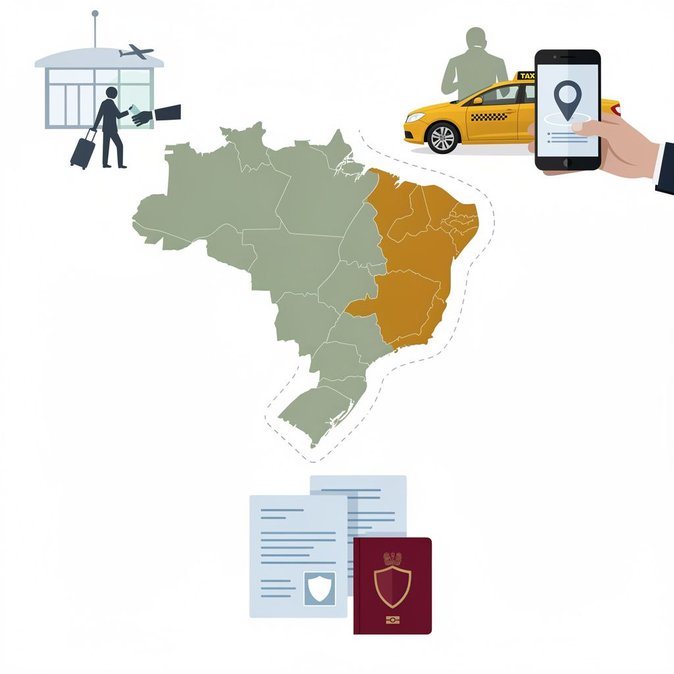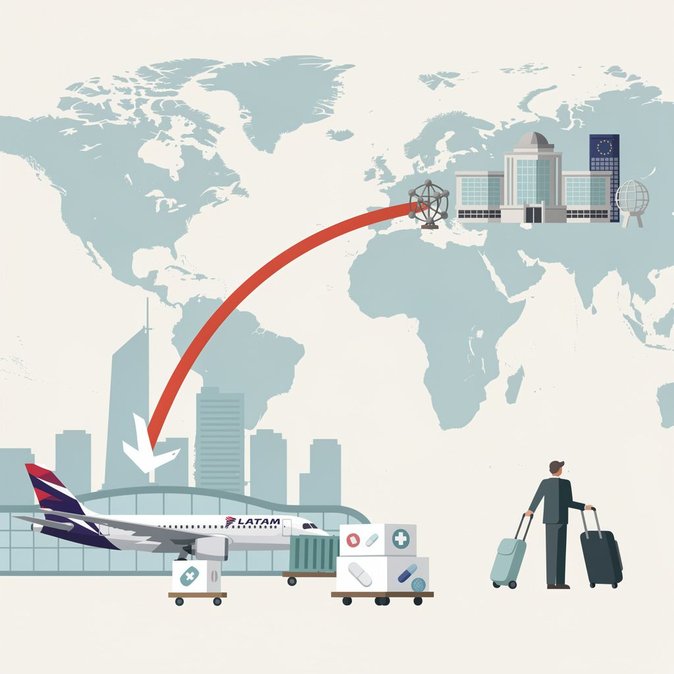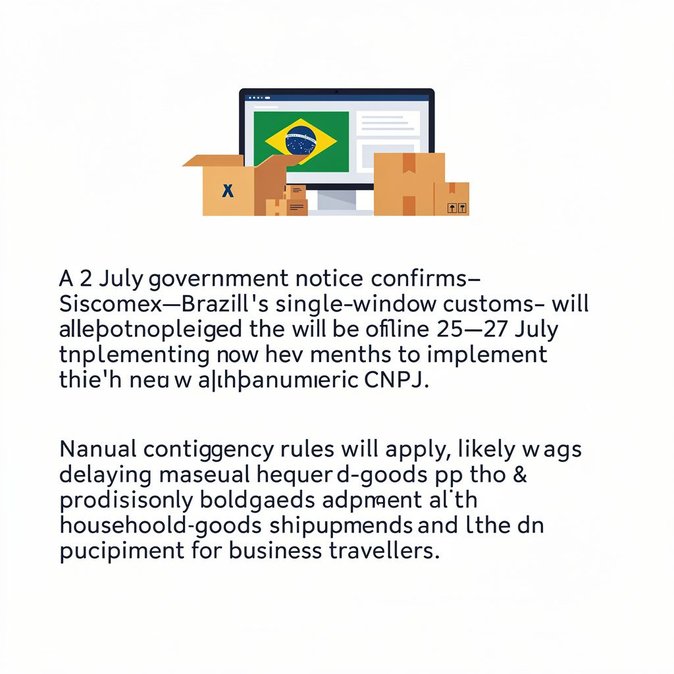
Brazil’s Foreign Trade Secretariat (Secex) issued Communiqué Importação nº 076/2026 on 20 July announcing a complete shut-down of the Siscomex foreign-trade platform from 07:00 on Saturday 25 July until 07:00 on Monday 27 July. The outage is required to migrate every federal system—including immigration and manifest modules—to the country’s new 14-character alphanumeric CNPJ corporate identifier. For global-mobility managers the timing is awkward. The freeze overlaps with the peak period for post-summer corporate transfers and with heavy traffic linked to FIFA Women’s World Cup ticket holders departing Brazil for qualifying matches abroad. During the window airlines will be unable to register temporary admission (“ATA Carnet”) goods and professional equipment in Siscomex Carga, and relocation agents will not be able to file “bagagem desacompanhada” (unaccompanied baggage) declarations electronically. Secex has activated contingency procedures: importers may use the paper DSI form under Article 4(IX) of IN SRF 611/2006, while exporters can revert to the manual DSE form under Portaria Coana 102/2018. Airlines and freight forwarders, however, warn that manual processing at Guarulhos and Viracopos typically adds 24–48 hours of dwell time and increases storage fees. Companies moving critical spare parts or personal effects are being advised to pre-clear shipments by 24 July or delay departure until 28 July. The CNPJ overhaul is part of a wider effort to align Brazil’s registries with OECD digital-identity standards and will allow foreign branches and joint ventures to be identified without issuing a brand-new numeric code. In the medium term, the change should simplify the onboarding of foreign suppliers and expatriate payroll, but the short-term pain is real. Employers with transferees arriving that weekend should build extra lead time into housing leases and hotel stays and warn travellers to carry original invoices for high-value electronics in case Customs officers fall back on manual verifications.