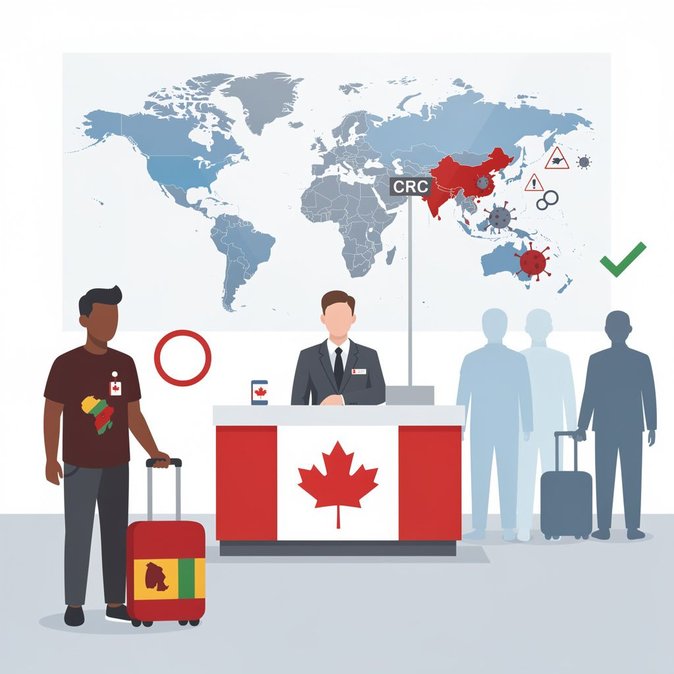
Effective 23:59 EDT on 20 July 2026, foreign nationals who have been in the Democratic Republic of the Congo (DRC) during the previous 21 days are barred from boarding flights to Canada. The Public Health Agency of Canada (PHAC) invoked an interim order under the Aeronautics Act following a sharp escalation of Ebola cases in eastern DRC. The measure—Canada’s first disease-specific entry ban since the COVID-19 pandemic—will remain in force until at least 29 August 2026. Canadian citizens, permanent residents and Indigenous persons registered under the Indian Act may still return but must undergo enhanced screening and adhere to a 21-day self-isolation protocol if symptomatic. The order complements earlier rules requiring anyone coming from DRC, Uganda or South Sudan to quarantine for 21 days on arrival. Immigration implications are significant: IRCC has suspended processing of visa and permit applications listing the affected countries as a last residence, and previously-issued documents have been frozen. Employers planning to transfer staff from Central Africa to Canadian worksites should reassess timelines and consider third-country routing once the ban lifts. Air carriers are legally obliged to deny boarding to ineligible passengers and could face fines of up to CAD 5,000 per infraction. Mobility managers should verify employee travel histories and ensure compliance documentation—such as health questionnaires—are retained for at least 12 months in line with Transport Canada guidance. PHAC stressed that the domestic risk to Canadians remains low; no Ebola cases have been detected in Canada to date. Nonetheless, the entry ban underlines the federal government’s willingness to deploy rapid border controls when international health emergencies threaten public safety—an operational precedent that HR and travel teams must now factor into crisis planning.
Source: CIC News