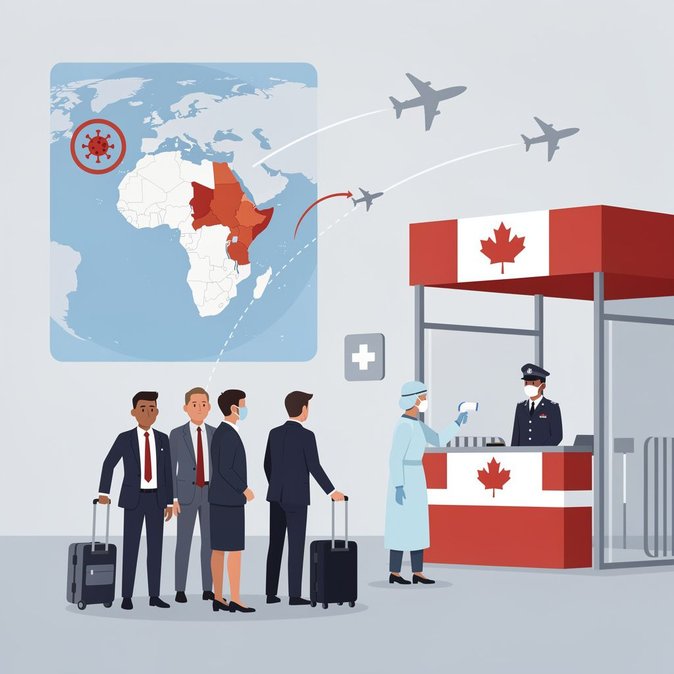
Canada has invoked emergency powers under the Quarantine Act and the Aeronautics Act to keep Ebola out of the country after the World Health Organization confirmed a growing outbreak in the Democratic Republic of Congo (DRC). In a statement late on July 19, the Public Health Agency of Canada (PHAC) said that, effective 23:59 EDT on July 20, **any foreign national who has been in the DRC during the previous 21 days will be refused boarding on flights to Canada or turned back at the land border**. Airlines and private operators are under an Interim Order that makes them legally responsible for screening passenger travel history before departure. The order is temporary but open-ended; PHAC will review the epidemiological situation every 14 days. Canadian citizens, permanent residents and registered Indians who have recently been in the DRC will still be allowed to enter but must report to a quarantine officer for mandatory health screening and may be directed to isolate or undergo monitoring. CBSA officers have received new operating instructions and additional detection tools—such as travel-history analytics in Advance Passenger Information/Passenger Name Record (API/PNR) feeds—to enforce the ban. For employers moving staff across borders, the measure introduces immediate routing and scheduling challenges. Crew changes for mining and energy projects in Central Africa, for example, will need alternative staging points such as Addis Ababa or Nairobi. HR departments should review duty-of-care policies and ensure that assignees maintain detailed travel logs; failure to disclose time spent in the DRC could lead to inadmissibility findings and substantial administrative monetary penalties for carriers. From an immigration-processing perspective, the restriction will delay biometrics and medical examinations for applicants who planned to attend Visa Application Centres (VACs) in Kinshasa. IRCC says affected applicants will receive automatic extensions for submitting documents, but corporate mobility teams should anticipate prolonged processing times. Travel managers are also urged to update traveller profiles within their global distribution systems so that automated duty-of-care alerts reflect the new ban. The last time Canada used a similar country-specific entry prohibition was during the 2022 Ugandan Ebola outbreak. PHAC officials stress that the policy is based on public-health risk, not nationality, and will be lifted once the DRC outbreak is contained. Until then, companies should revisit contingency plans for critical travel, ensure that medical evacuation coverage extends to neighbouring countries, and brief travellers on Canada’s fines—up to CAD 750,000—and potential imprisonment for non-compliance.
Source: Public Health Agency of Canada