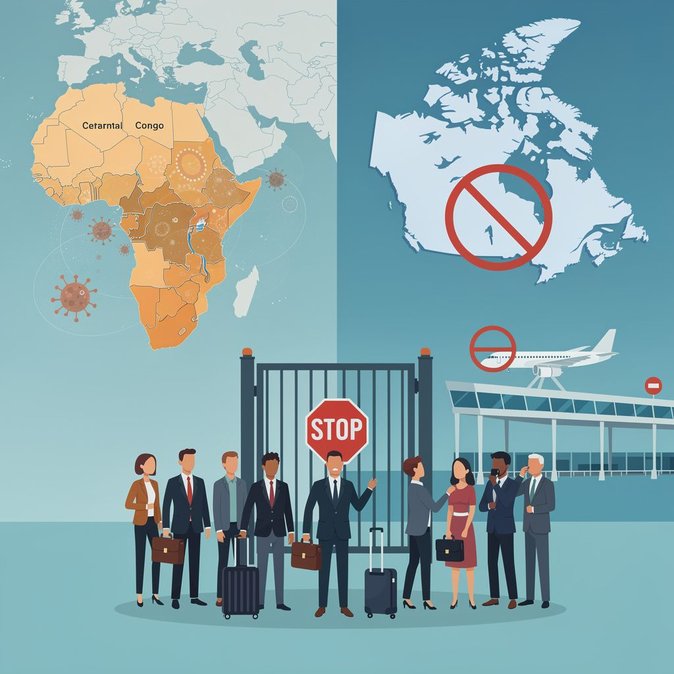
At 11:59 p.m. EDT on July 20, Canada implemented an immediate entry ban on foreign nationals who have been in the Democratic Republic of the Congo (DRC) within the previous 21 days. Commercial airlines and private carriers have been ordered to deny boarding, and the measure will stay in force until at least August 29, 2026. The Public Health Agency of Canada (PHAC) announced the restriction under an interim order of the Aeronautics Act after the World Health Organization confirmed more than 2,100 Ebola cases and 828 deaths in the DRC. The ban builds on broader Ebola measures introduced on May 30, which already require any traveller—Canadian citizens included—who has visited the DRC, Uganda or South Sudan to quarantine for 21 days on arrival. For global-mobility managers, the immediate concern is duty-of-care: employers with staff rotating through Central Africa should reroute travel or defer assignments. Immigration counsel should also verify whether employees with pending temporary resident applications list one of the affected countries as a recent residence, as IRCC is suspending processing and has the power to cancel visas during the ban period. Logistically, air-cargo operations remain unaffected, but business-traveller flows linked to mining, energy and development projects in Central Africa will face significant disruption. Organisations should brief travel-risk teams on the high penalties for non-compliance and the possibility of last-minute itinerary changes if the ban is extended or expanded. Longer term, the use of new emergency powers enacted in Bill C-12 means that similar health-related entry bans could be imposed more quickly in future outbreaks. Companies with large expatriate programmes should ensure that crisis-response plans include rapid visa-status reviews and quarantine support mechanisms.
Source: CIC News