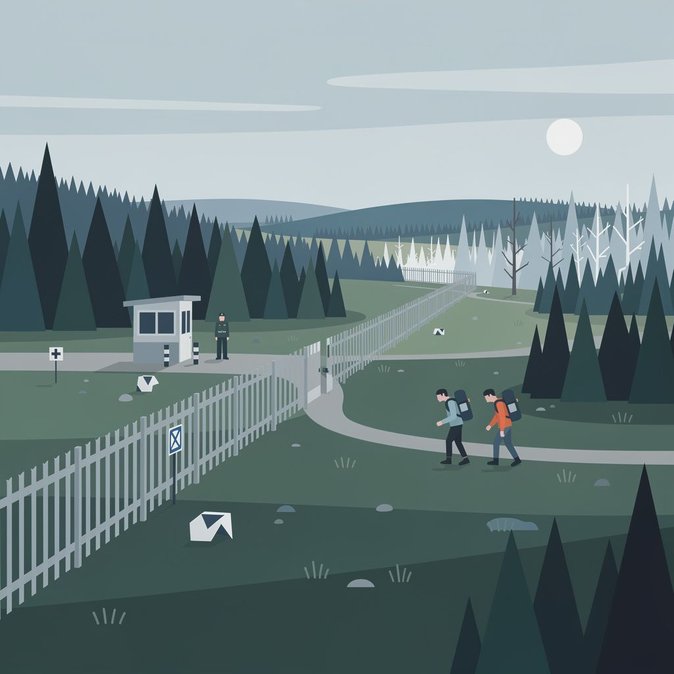
Kainuu Border Guard announced on 20 July that it is investigating an alleged illegal entry involving two individuals who walked across forest terrain into the municipality of Suomussalmi, some 200 kilometres north of Kuusamo. The pair reportedly lacked travel documents and told officers they had been hiding in cabins on the Russian side before deciding to cross in heavy rain. While their citizenship has yet to be verified, preliminary interviews suggest they may be third-country nationals escaping the war in Ukraine—a reminder that the Finnish frontier serves as a secondary route for people displaced by wider regional conflicts. Both have applied for asylum and will be transferred to Oulu reception centre pending admissibility screening. Suomussalmi is outside the initial stretch of Finland’s new border fence, leaving that sector reliant on mobile patrols and aerial surveillance. Officers note that ground conditions—bogs, lakes and dense forest—make detection challenging and manpower-intensive. The incident has reignited debate in Parliament about extending the fence further north, a move that would require additional funding in the 2027 budget. For mobility managers, the case underscores the unpredictability of land routes through Arctic Finland and the importance of contingency planning for posted workers who may need to transit through or near remote border zones. Investors in the Hossa–Kainuu eco-tourism corridor are also monitoring developments, as heightened security measures could affect visitor flows and staffing from non-EU countries. In the meantime, local authorities have asked residents and businesses to report unusual movements near cottages and wilderness trails, reinforcing a ‘whole-of-society’ approach to border vigilance that could influence community relations and labour availability in sparsely populated regions.
Source: Yle