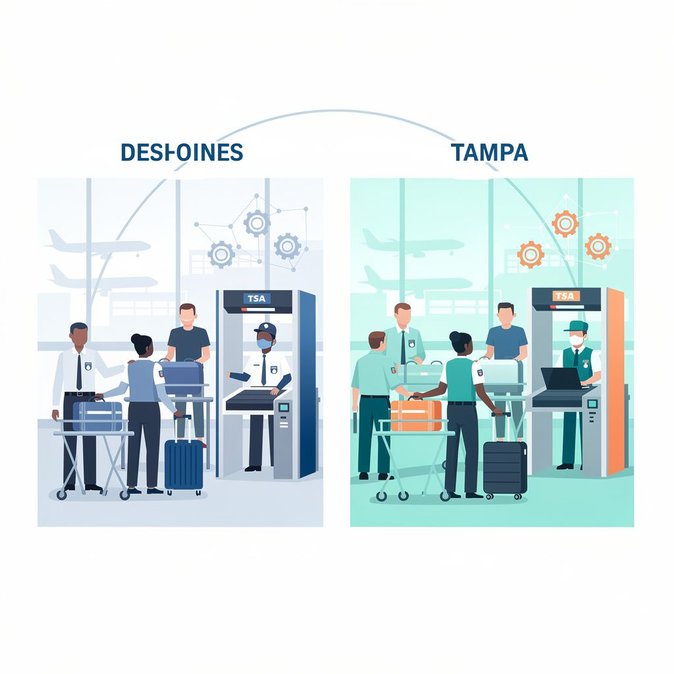
The Transportation Security Administration’s experimental “Gold+” screening model has its first adopters: Des Moines International Airport and Tampa International Airport. Emails to employees on 20 July 2026 confirmed that both facilities will transfer checkpoint operations to private contractors under a 10-year, multiple-award contract still out for bid. Gold+ builds on TSA’s long-running Screening Partnership Program but goes further by outsourcing not only front-line staff but also the procurement and maintenance of screening technology. TSA will retain regulatory oversight, while displaced federal screeners receive “right-of-first-refusal” job offers from the contractor. Airport authorities tout the shift as a hedge against federal shutdowns and as a fast track to adopt biometric bag-drop, remote image-analysis and AI threat-detection systems. Labour groups, however, worry about job security and the unraveling of collective-bargaining protections; AFGE has urged the Senate to block the nomination of Gold+ advocate David Cummins as TSA Administrator. For frequent business travelers, the change could mean shorter lines and quicker adoption of Credential Authentication Technology—but also inconsistency as different private operators roll out divergent processes. Corporate travel managers should monitor TSA communications for enrollment windows and updated PreCheck lane layouts at the two airports. TSA’s revised RFP requires bids by 31 July and targets a 28 September “go-live” date—an aggressive timetable that, if met, would make Des Moines the first fully privatized medium-hub checkpoint before the 2026 holiday rush.
Source: Federal News Network