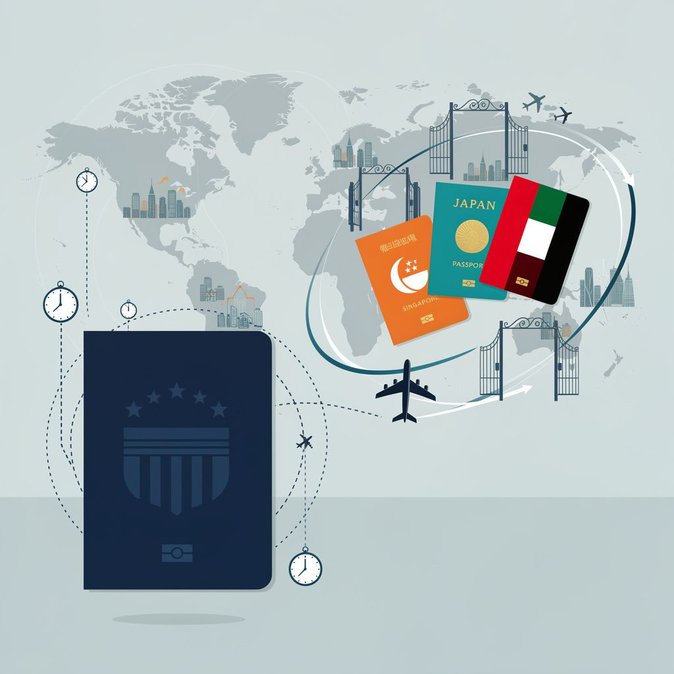
Henley & Partners marked the 20th anniversary of its Passport Index on 21 July 2026, showing that the average passport now affords visa-free access to 108 destinations—almost double the 58 recorded in 2006. Yet the United States, which topped the ranking in 2006, holds only 10th place today, one of few top-tier passports still requiring visas for China. The findings matter for multinationals: American executives enjoy broad global mobility, but face stiffer competition from Singaporean, Japanese and increasingly Emirati passport holders whose documents open as many as 192 destinations visa-free. Companies planning regional hubs or rotational assignments may therefore weigh citizenship portfolios when staffing global roles. Analysts point to stalled U.S. reciprocity negotiations with emerging markets and sluggish Visa Waiver Program expansions as drag factors. Meanwhile, the study draws a strong correlation (ρ = 0.65) between peacefulness and passport power, but the U.S. and Israel are outliers—demonstrating high travel freedom despite low peace scores. For HR, the ranking is a reminder to budget extra lead time for China and other still-visa-required jurisdictions. Wealth-management advisers note rising interest among high-net-worth Americans in “citizenship-by-investment” strategies to regain top-tier mobility. Henley says it will explore these trends at its forthcoming Safe Haven Forum, where policymakers will debate whether geopolitical volatility will widen—or narrow—the global mobility gap over the next two decades.
Source: PR Newswire / Henley & Partners