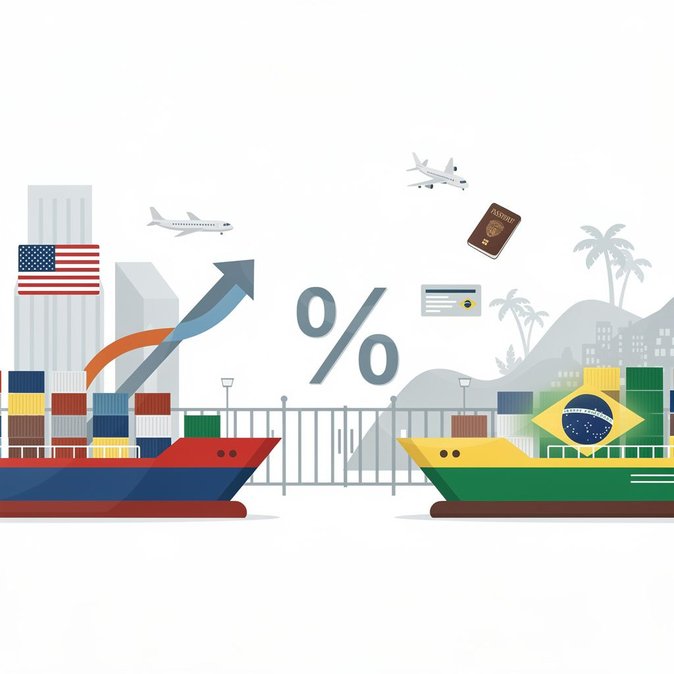
The trade measures threatened for months by Washington formally entered into force on 22 July 2026, slapping a blanket 25 % surcharge on a wide range of Brazilian steel, aluminium, footwear and machinery exports. The move follows a Section 301 investigation that accuses Brazil of unfair digital-trade and environmental practices. In a sharply worded statement the Planalto Palace called the tariff rollout “a lamentable milestone” in bilateral relations and confirmed it will activate Brazil’s Law of Reciprocity—a statute that allows counter-measures ranging from mirrored tariffs to visa and service-fee surcharges on U.S. nationals. Details are to be finalised after an inter-ministerial impact study, but officials told reporters that additional consular fees for American business visitors are “on the table.” The government also outlined a three-pronged domestic response: diversifying export markets, rolling out emergency credit lines for affected industries and reviving a dispute before the World Trade Organization. Businesses with U.S.-facing supply chains must now factor in both higher import costs stateside and potential Brazilian counter-tariffs on critical inputs. Mobility managers should watch the visa angle closely. Brazil reinstated short-stay visa requirements for U.S. citizens in 2025, but processing was streamlined via an e-visa. Any hike in reciprocity fees or shift back to paper visas would lengthen lead-times for technical teams rotating between the two countries. Companies are advised to schedule essential travel well in advance and budget for possible cost increases. Longer term, firms may accelerate near-shoring projects inside Mercosur, whose provisional trade accord with the EU enters force later this year, offering alternative export outlets.
Source: CNN Brasil