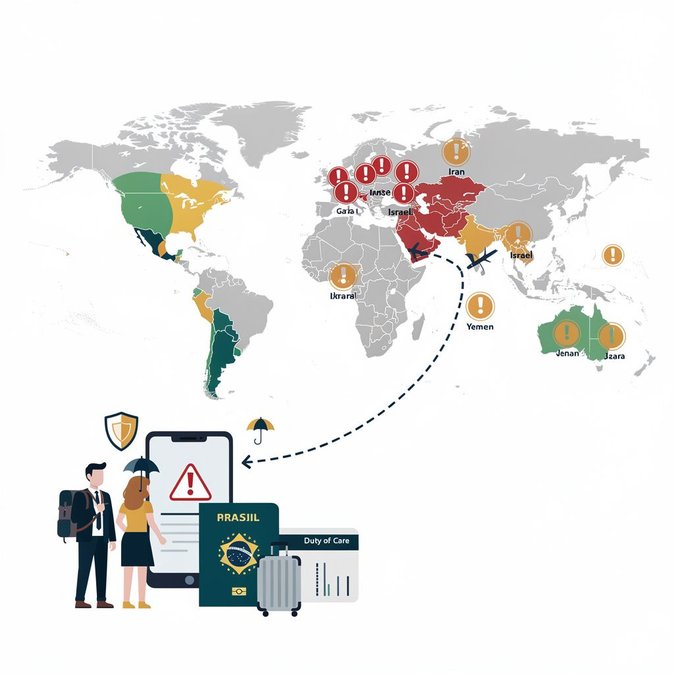
The Brazilian Ministry of Foreign Affairs (Itamaraty) published an updated consular alert in the early hours of Wednesday, 22 July 2026, advising Brazilians to avoid all travel to Iran, Israel, southern Lebanon, Gaza and Yemen, and to postpone non-essential trips to a further ten countries across the region—including Jordan, Qatar, Kuwait, the United Arab Emirates, Bahrain and Saudi Arabia. The new notice replaces a bulletin issued just six days earlier and reflects the rapid deterioration of regional security after a wave of Iranian drone and missile strikes on U.S. and allied assets and retaliatory U.S. air-operations. The ministry’s communiqué stresses that, while transit through major Gulf hubs remains technically possible, travellers should be prepared for sudden flight cancellations, lengthy security checks and insurance exclusions. Itamaraty recommends that Brazilian nationals already in the affected countries register their presence with the nearest Brazilian embassy, monitor local media and refrain from photographing or commenting on military activity—behaviour that can trigger arrest under local national-security legislation. Travellers are urged to keep passports valid for at least six months and to contact airlines directly should connections be cancelled. For corporate mobility managers the advisory has immediate consequences: duty-of-care policies must be reviewed, non-essential assignments placed on hold, and crisis-response plans updated to reflect the new list of no-go destinations. Companies with personnel on rotation through Gulf logistics hubs should ensure alternative routings and medical-evacuation coverage are in place. Brazilian travel insurers normally follow the government’s risk classification; policies issued after the alert may now exclude cover for the listed jurisdictions, raising costs for any essential travel that cannot be deferred. Expatriate families planning to transit regional airports during the July school holidays should also expect heightened screening and potential schedule changes.
Source: O Dia