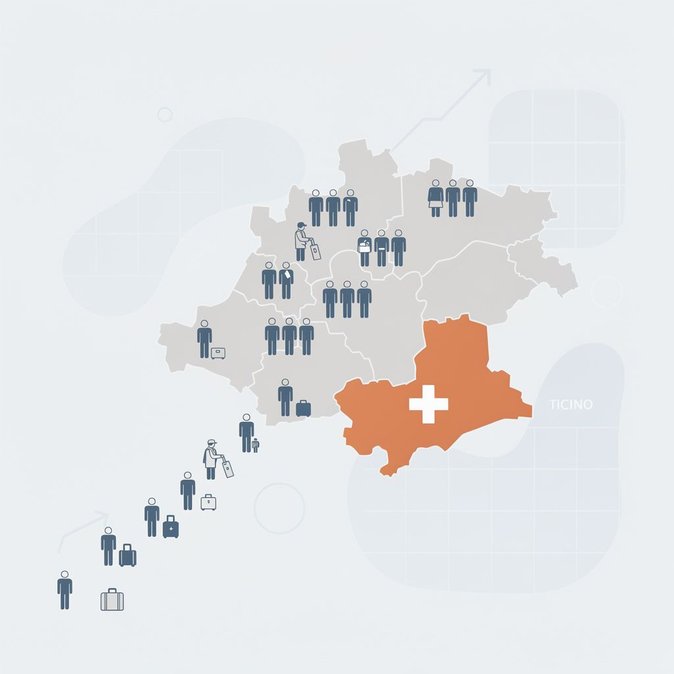
Switzerland’s 90,000-strong community of Italian ‘frontaliers’ finally has legal clarity on working from home. On 22 July 2026 the specialist portal FrontalieriTicino reported that Rome’s Council of Ministers had completed ratification of a protocol amending the 2020 bilateral frontier-worker treaty with Switzerland. The protocol writes a 25 % telework tolerance directly into the treaty, allowing an employee who normally crosses the border daily to perform up to a quarter of their annual working time from their residence in Italy without jeopardising their Swiss G-permit status or triggering double taxation. The change codifies practices that mushroomed during the pandemic but that have since existed in a grey zone. Until now companies relied on ad-hoc cantonal dispensations and payroll gymnastics to avoid creating a second place of work in Italy – with the attendant social-security, accident-insurance and data-protection headaches. From a corporate-compliance perspective, the protocol turns that uncertainty into a hard ceiling and a simple counting rule: roughly one day per week may be spent at home, averaged over a year. For employers, the biggest win is administrative simplicity. Swiss firms will no longer have to open an Italian social-security position or register a ‘permanent establishment’ provided the 25 % threshold is respected. HR departments must, however, install reliable time-tracking and maintain documentary evidence – the protocol specifically requires written amendments to employment contracts and demonstrable monitoring of days worked abroad. The tax split also becomes predictable: Switzerland retains the right to levy source tax on the entire salary, while Italy may apply a credit mechanism on the days worked on its territory. Payroll providers in both countries are already updating software to automate the calculations. Multinationals with satellite offices in Milan, Como or Varese can therefore expand hybrid-work schemes without facing unexpected reassessments. Practically, frontier workers should confirm that travel-insurance policies and professional-liability cover remain valid when working from home and that their Swiss accident coverage (LAA) still applies. Experts also advise employees to keep a personal log of cross-border days in case of spot checks by either tax authority. With parliamentary ratification completed on both sides, the amendment enters into force 30 days after the exchange of instruments – expected early autumn – giving companies a narrow window to update contracts and payroll rules.
Source: FrontalieriTicino