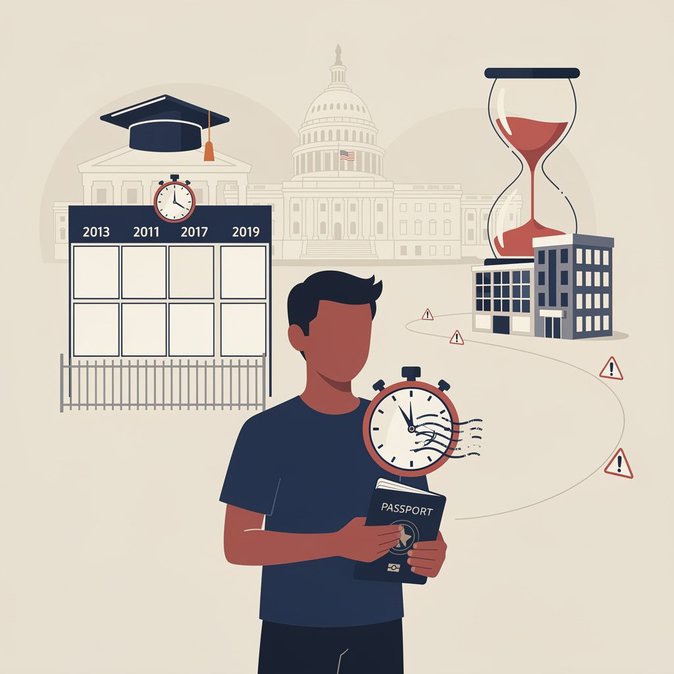
An internal advisory posted to the University of Maryland, Baltimore County (UMBC) community on July 22 details sweeping changes ushered in by DHS’s final rule “Establishing a Fixed Time Period of Admission” for students and exchange visitors. Effective September 15, the regulation abolishes the open-ended “duration of status” model and imposes a hard four-year “admit-until” date for most F-1 and J-1 entrants, with extensions requiring a formal USCIS filing. Current students in the U.S. retain status until their program end date or September 15 2030, whichever comes first. Anyone who leaves and reenters after September 15, however, will be stamped with a firm exit deadline. Universities must now advise students to file costly Form I-539 extensions for academic setbacks, research delays or doctoral over-runs. For corporate mobility, the rule complicates long-term internship and co-op programs that rely on STEM OPT as a bridge to H-1B. Students unable to finish degrees before the four-year mark may lose OPT eligibility, shrinking the talent pipeline for tech and engineering employers. Institutions are ramping up advisor training, revising academic planning tools and warning faculty that course failures could carry immigration consequences. Litigation looms; higher-ed associations argue the rule exceeds DHS authority and will flood USCIS with 80,000 additional extension filings annually. Until courts weigh in, companies should audit onboarding timelines for F-1 hires graduating after 2030 and consider earlier H-1B sponsorship.
Source: UMBC Campus Advisory