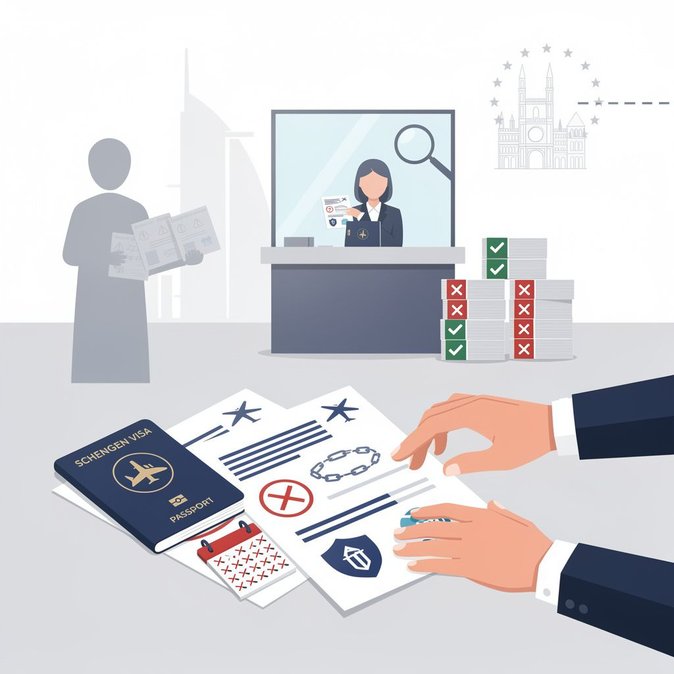
The Royal Danish Consulate General in Dubai has issued an unusually blunt public warning after discovering a surge in falsified supporting documents in Schengen visa applications lodged by UAE-based residents. Deputy Head of Mission Hanne-Rie Madsen told The National that consular staff are now rejecting roughly ten applications every working day because flight itineraries, hotel bookings or travel-medical insurance certificates have been forged or manipulated. The trend is fuelled by the summer travel rush and an acute shortage of appointment slots at several European missions, a shortage that in turn reflects reduced staffing levels since the Iran-Gulf conflict escalated earlier this year. Consular officials say many applicants rely on unlicensed “visa fixers” who promise quick results for hefty fees; these intermediaries frequently supply “dummy” air tickets that look genuine but cannot be flown, QR codes that link to cancelled hotel reservations, or insurance policies issued in other people’s names. Under EU rules, submitting even a single fraudulent document triggers an automatic refusal — and, in serious cases, can lead to a multi-year ban on entering any of the 29 Schengen countries. The consulate’s Facebook post this week therefore urges travellers to make cancellable bookings themselves and to verify every page of the final submission, stressing that “agents are not responsible – the applicant is.” Travel agents interviewed by The National say demand for dummy bookings has exploded because many Gulf residents cannot risk paying non-refundable fares before a visa is granted. Yet rejection rates for files containing fabricated reservations reportedly exceed 80 percent, turning the short-term “solution” into a vicious circle that further clogs appointment calendars. Legitimate service provider VFS Global reiterated that it does not sell or reserve time-slots and reminded customers of its #DoNotFallForFraud campaign. For business travellers and corporate mobility managers, the episode is a timely reminder that visa compliance risks extend well beyond immigration fines. A single false statement can derail time-sensitive deals, damage an assignee’s international travel profile and expose employers to reputational harm. Companies should audit any external visa agencies they use, instruct employees to obtain refundable tickets, and build longer lead-times into European travel plans until consular capacity normalises. Those needing to visit Denmark can still secure legitimate appointments through VFS Global, but the queue is now measured in weeks rather than days. Looking ahead, European posts are expected to restore full staffing levels after the summer, yet the consulate cautions that stricter document-verification protocols will remain. Mobility teams should therefore assume that any shortcuts will be quickly detected — and refused. As Madsen summed up: “There is no substitute for an honest application.”
Source: The National