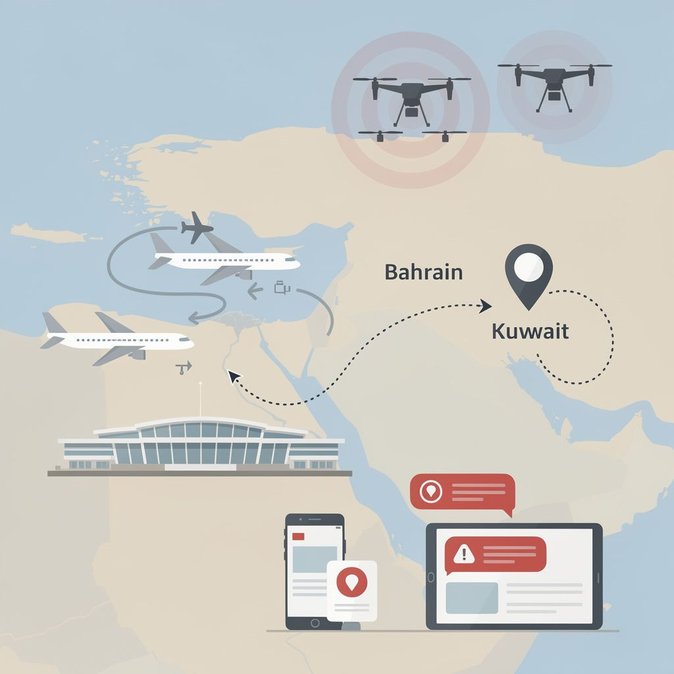
Airlines operating out of the United Arab Emirates have issued a new round of schedule changes after Kuwait reported intercepting hostile drones linked to the Iran conflict. Gulf News reports that Etihad Airways has extended the cancellation of its Abu Dhabi–Kuwait services through 26 July and scrapped selected Bahrain rotations through 25 July. Emirates, flydubai and Air Arabia have also cancelled or delayed several services, mainly to Bahrain, Kuwait and Saudi regional gateways, while keeping the vast majority of long-haul flights operating. Dubai International (DXB) and Abu Dhabi Zayed International remain fully open, but travellers faced rolling delays on Thursday morning, including Emirates flights from London, Manchester and New York and flydubai services to Almaty and Lucknow. Sharjah Airport reported only minor knock-on effects. The dynamic situation follows weeks of airspace warnings, with multiple international carriers — from British Airways to Singapore Airlines — extending suspensions of Dubai or Riyadh routes into the autumn as insurance and routing costs rise. For corporate mobility programmes, the disruption underscores the need for real-time itinerary monitoring and flexible ticketing policies. Employers should instruct business travellers to register contact details with airlines, allow additional connection buffers and keep contingency budgets for hotel overnights. Freight forwarders moving time-critical components through DXB’s belly-hold network should likewise validate uplift guarantees. The episode also highlights a wider geopolitical risk: drone activity in neighbouring states can spill over into last-minute flight bans affecting UAE hubs, even when local airspace remains formally open. Mobility and security teams are therefore advised to subscribe to airline operations bulletins and government travel advisories, recognising that cancellations are often announced less than 12 hours before departure. While the U.S. State Department has upgraded its worldwide caution, UAE authorities have so far refrained from imposing additional internal restrictions. Should the pattern of targeted drone strikes persist, analysts expect airlines to keep a “stop-and-go” approach — cancelling clusters of Gulf flights while safeguarding high-yield intercontinental routes via alternative corridors over the Arabian Sea and Red Sea.
Source: Gulf News