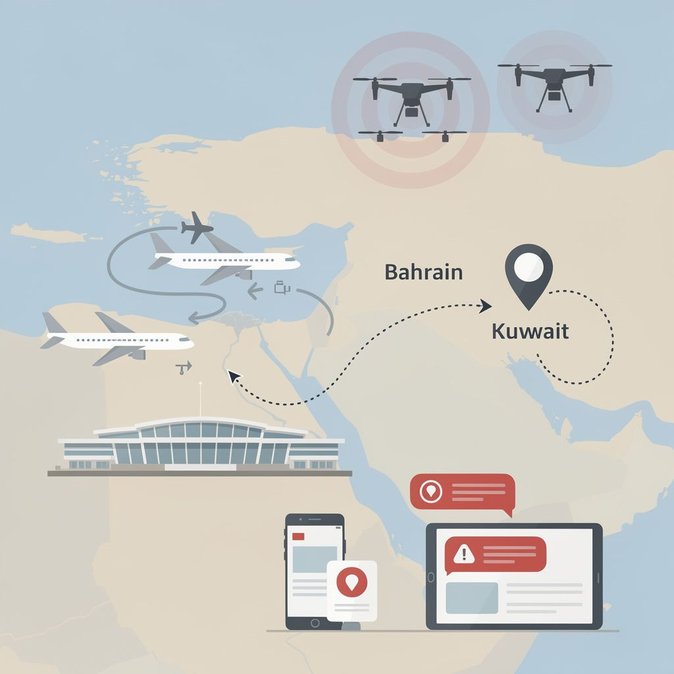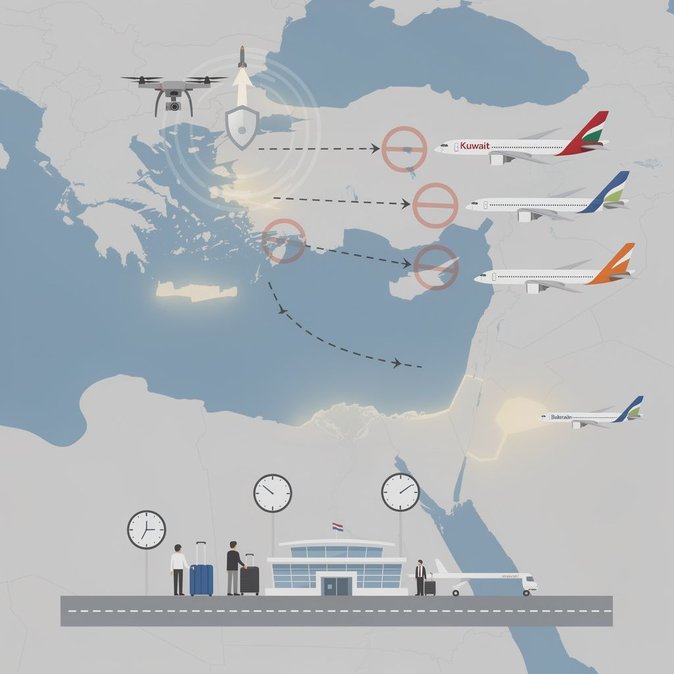
Travellers departing the UAE on 23 July woke up to a raft of same-day cancellations after Kuwaiti air-defence units said they had intercepted ‘hostile drones’ overnight. Although Dubai, Abu Dhabi and Sharjah airports are functioning normally, services to Kuwait City and Manama are taking the brunt of the precautionary cuts. Etihad Airways has pulled flights EY653/654 (Abu Dhabi–Kuwait) through 26 July and axed Bahrain rotations for 23-25 July. Emirates has cancelled up to nine Kuwait rotations (EK853-EK872) and six Bahrain services, while flydubai and Air Arabia report scattered cancellations and delays on the same city-pairs. Kuwait, for its part, is urging residents to stay calm but has not reopened affected airspace segments. Despite headline-grabbing cancellations, UAE civil-aviation authorities emphasise that the country’s own airspace remains unrestricted; most long-haul departures are simply using southern detours to avoid the northern Gulf. Still, corporate travel managers should warn staff that knock-on effects—crew-duty limits, aircraft positioning and connecting-flight mis-matches—could ripple across wider networks. Recommended actions: • Verify flight numbers (not just routes) before sending travellers to the airport. • Check that contact details in PNRs are up to date so airline SMS alerts get through. • For critical trips consider booking fully-refundable fares or holding backup routings via Doha or Muscat. Passengers holding partially used tickets should document additional expenses; many corporate insurance policies will refund surface transport to alternative GCC gateways when the original flight is cancelled for security reasons.
Source: Gulf News