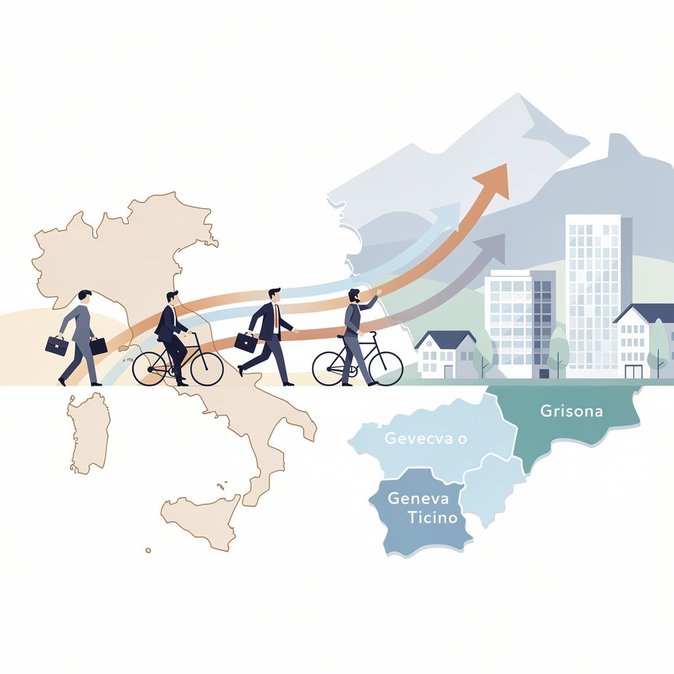
Fresh data released by the Federal Statistical Office (FSO) confirm that Switzerland’s cross-border workforce continues to grow, driven largely by commuters from northern Italy. At the end of 2025, 91,246 Italian residents held an active G-permit – up from 70,157 a decade earlier. Ticino remains the main destination, employing 78,491 Italian frontaliers, but other cantons are catching up. Geneva, Valais and the Grisons have each posted double-digit growth, fuelled by hospitality, construction and health-care vacancies. Particularly striking is the 78 % jump in workers from the province of Monza-Brianza, reflecting improved motorway links through the Mendrisio corridor and sustained Swiss demand for skilled metal-workers and technicians. Economists note that the trend coincides with Switzerland’s historically low unemployment rate and ageing domestic workforce. However, it also revives debate about wage pressure and infrastructure strain in border regions. Ticino’s government has called for tighter labour-market inspections to ensure imported labour does not undercut local pay scales. For HR and mobility managers the numbers underline the importance of cross-border talent pipelines. Companies relying on frontaliers are reminded to monitor forthcoming rule changes – including mandatory online notification of new hires and possible permit-fee increases – while ensuring equal-pay compliance to avoid reputational risks.
Source: FrontalieriTicino