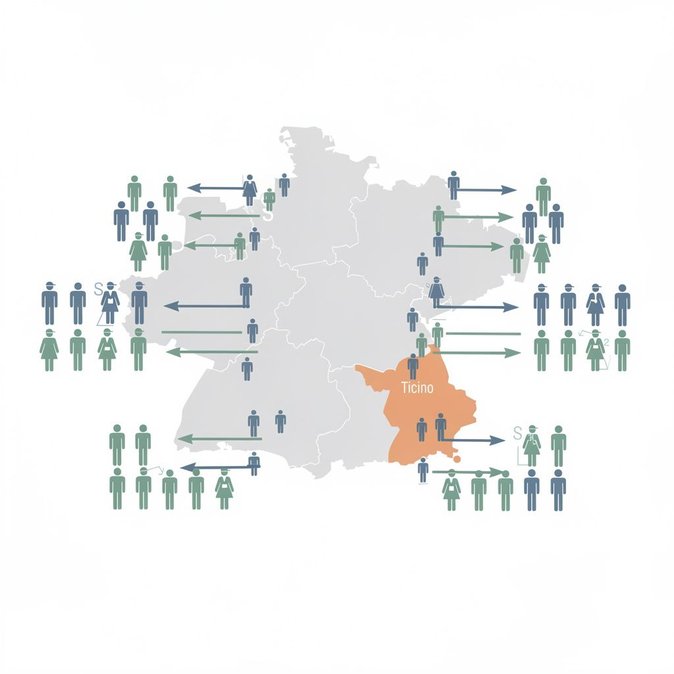
Fresh labour-market statistics released on 22 July 2026 by the Federal Statistical Office (FSO) paint a contrasting picture for Switzerland’s cross-border workforce. In the first quarter of the year the total number of active G-permit holders climbed 1.9 % year-on-year to 413,000 – yet the canton of Ticino bucked the trend, slipping 0.2 % quarter-on-quarter to 78,562 frontier workers. The micro-decline may look marginal, but it is the first negative print for Ticino since 2022 and comes amid a broader debate about wage pressure and commuter congestion in the Italian-speaking canton. Economists attribute the drop to a combination of factors: continued relocation of back-office functions to Zurich and Basel, the post-pandemic rise of remote work (formalised this week through the Italo-Swiss telework protocol) and a slight cooling in the construction sector south of the Alps. Nationally the picture remains robust. G-permit growth is strongest along the Genevois border corridor, where French residents now represent 58.3 % of all frontier workers. The pharmaceutical and watch industries, still battling skill shortages, have continued to hire cross-border talent aggressively. For HR and mobility managers the diverging trajectories underline the importance of location-specific workforce planning. Companies operating plants or service centres in Ticino may need to double-check staffing pipelines and succession planning, while firms elsewhere in Switzerland should ensure they remain compliant with quotas and working-time documentation, as labour inspectors have announced spot checks in Geneva and Basel for Q3. The FSO data set also serves as an early indicator for cantonal minimum-wage debates scheduled for referendum in Ticino next spring. A sustained shrinkage of the frontier workforce could ease political pressure, but a one-quarter decline is too small to draw definitive conclusions.
Source: FrontalieriTicino