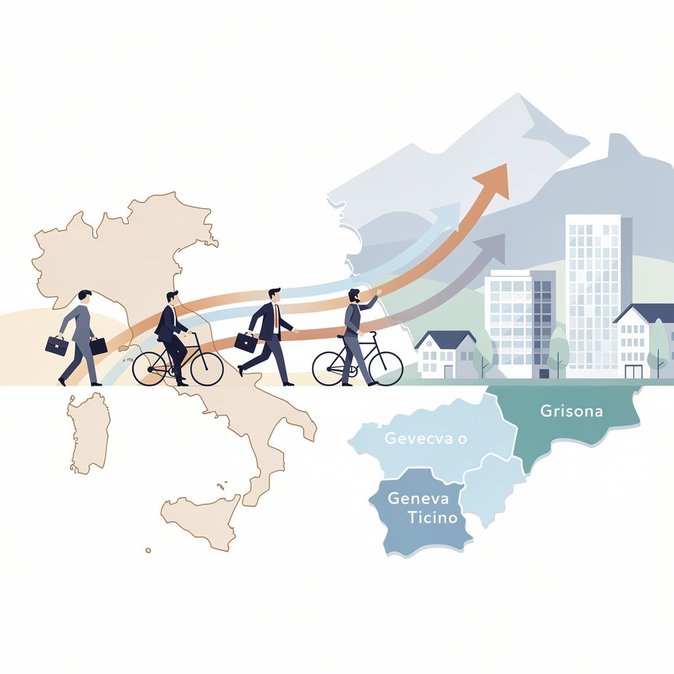
As remote work becomes entrenched, advisers are warning Swiss-based employees who work part-time from their foreign residence – and their HR departments – to review social-security obligations before 1 September, when the EU-wide telework framework enters full force. Under Regulation 883/2004 and its 2023 telework addendum, spending more than 49.9 % of working time in one’s country of residence can switch the applicable social-insurance regime. For the growing cohort of Franco-Swiss staff who now split their week between a Geneva office and a home in Annecy, that could mean shifting from Switzerland’s AVS/AI and LPP schemes to France’s URSSAF and CNAV, affecting both employee deductions and employer charges. The change also impacts accident insurance and health-insurance choices (LAMal versus CMU), which in turn drive salary-package costs. Insurance broker Decaux Assurances notes a spike in queries since Swiss companies began formalising hybrid-work policies. It recommends that employers obtain or renew A1 certificates for anyone teleworking abroad up to the 49.9 % threshold and update payroll systems to flag cross-border days. Failure to secure the right paperwork can lead to double contributions and back-payments. Employees are equally urged to check private health, life and liability cover. Many standard Swiss or French policies exclude prolonged foreign stays, leaving teleworkers exposed during part of the week. Specialist ‘frontier-telework’ packs covering both countries are emerging but remain pricier than domestic products.
Source: Decaux Assurances Blog