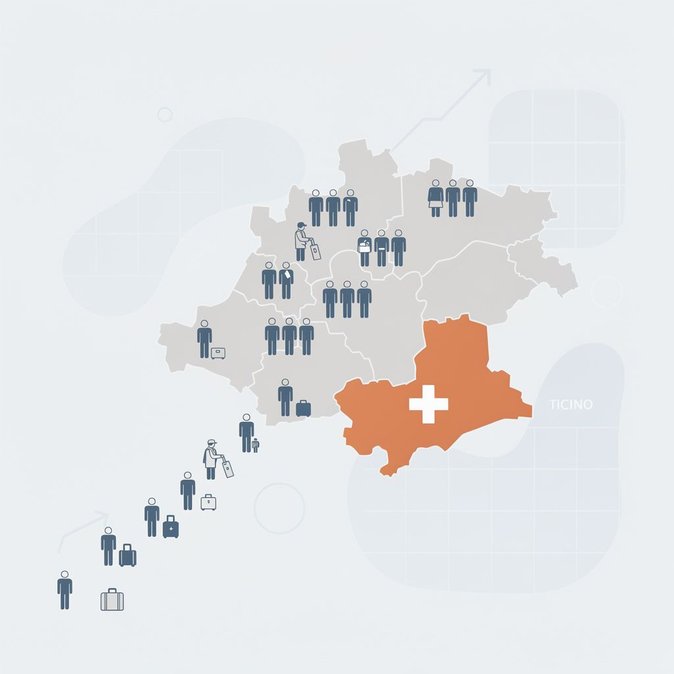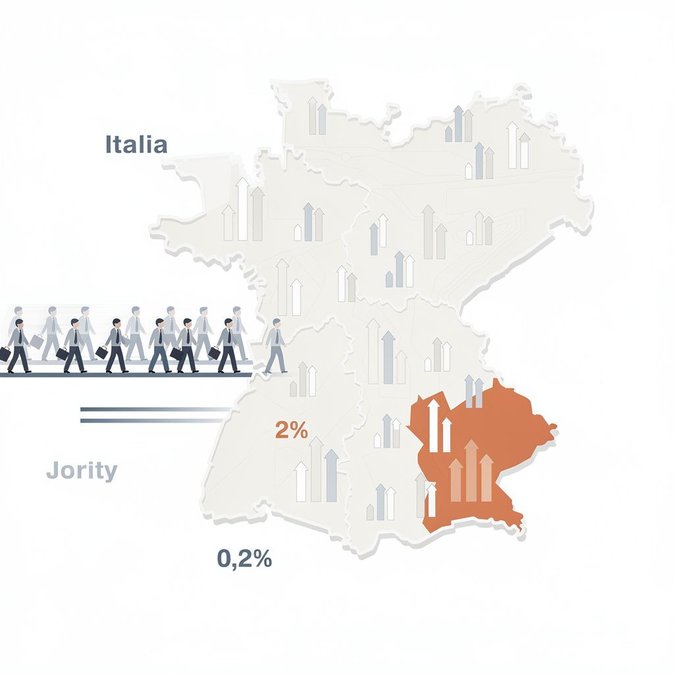
Fresh data from the Federal Statistical Office (FSO) show that the number of active G-permit holders in canton Ticino slipped by 0.2 % in the first quarter of 2026 to 78 562. The figures, released and analysed by specialist portal FrontalieriTicino on 22 July 2026, mark the first quarterly decline in three years and contrast with a 1.9 % year-on-year rise in cross-border labour nationally, to 413 000. French residents continue to represent the largest share of Switzerland’s frontier workforce (58.3 %), but Ticino remains dominated by Italian commuters, many of whom work in manufacturing and hospitality. Economists attribute the canton’s slowdown to a combination of stronger job creation in neighbouring Lombardy, the strong Swiss franc and the gradual rise of sectoral minimum wages inside Ticino that narrow the wage differential. For employers, the levelling-off may signal the end of an era of seemingly unlimited access to lower-cost Italian talent. Staffing agencies in Lugano report longer lead times in filling vacancies, especially for skilled technicians. Companies may need to sweeten relocation packages or tap into other EU labour pools, triggering additional immigration-compliance steps. Global mobility teams should also brace for tighter labour-market tests when sponsoring third-country nationals. Cantonal authorities use frontier-worker availability as one yard-stick when determining whether Swiss or EU/EFTA talent is scarce enough to grant an L- or B-permit. With the supply of Italian commuters no longer expanding, permit approvals for non-EU specialists could become modestly easier—but only if firms can document genuine recruitment efforts. The FSO will release second-quarter numbers in October. In the meantime, HR departments are encouraged to audit payroll withholding for existing G-permit staff and verify continued compliance with the New Frontier Agreement’s tax-credit rules, particularly for employees who have added telework days under the new 25 % regime.
Source: frontaliereticino.ch