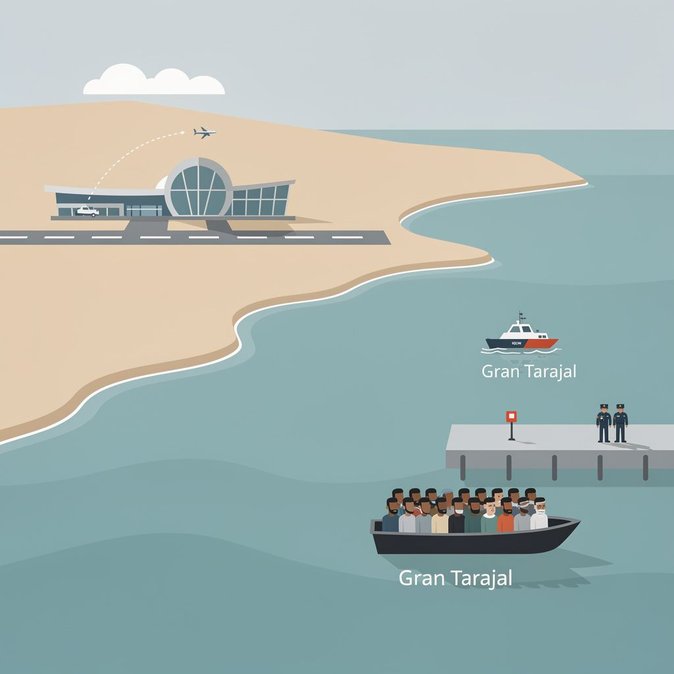
The Spanish civil-guard command in Fuerteventura confirmed on Friday afternoon (24 July 2026) that a wooden fishing vessel adapted to carry people docked at Gran Tarajal with 20 adult men of Maghreb origin on board. According to the first medical triage carried out by the Canary Islands emergency service (SUC), all of the occupants were in apparent good health and were transferred to the harbour’s temporary reception facility for 72-hour police screening. The arrival underscores how the Atlantic “Canary Route” remains active even in mid-summer, when calmer seas make the Mediterranean crossings more attractive for smuggling networks. So far this year, the Ministry of the Interior records 7,430 arrivals to the islands, broadly in line with 2025 levels despite Spain’s intensified joint patrols with Mauritania and Senegal. Industry observers note that SMEs that rely on North-African seasonal labour continue to follow the situation closely, as maritime pressure often translates into tighter entry checks at mainland airports. For global-mobility managers the key takeaway is that migrants rescued in the archipelago are processed under accelerated asylum and return procedures that frequently overflow local resources, occasionally causing flight disruptions at Fuerteventura and Tenerife Sur when mass transfers are organised to the peninsula. Companies planning group movements through Canary airports over the next fortnight should monitor NOTAMs and carrier alerts for short-notice slot changes. Longer-term, the continued flow could accelerate Madrid’s discussions with Brussels on a burden-sharing relocation scheme—talks that may reshape Schengen-wide carrier liability rules and pre-boarding document checks. The episode therefore has both an immediate operational impact for travel planners and strategic significance for future compliance costs.
Source: eldiario.es Canarias Ahora