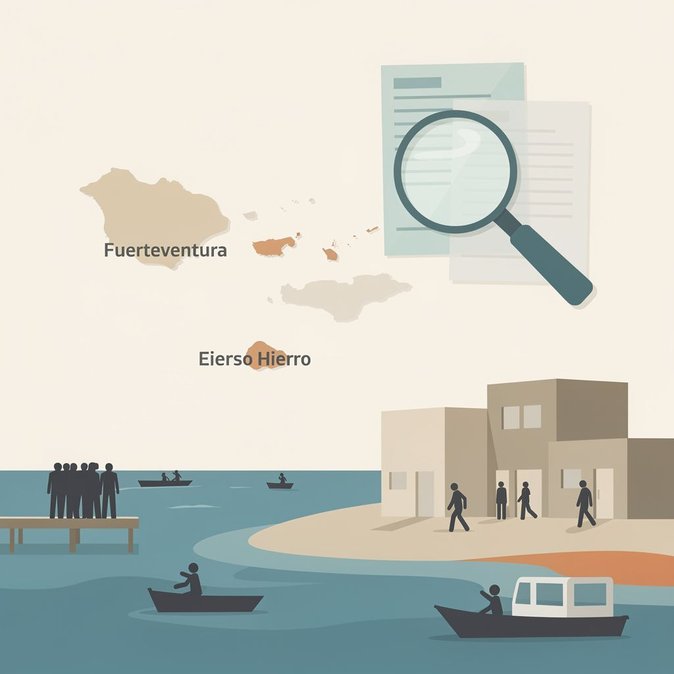
The Boletín Oficial del Estado (BOE) of 24 July published two emergency contract awards by the Interior Ministry’s Infrastructure and Security branch to expand reception capacity in the Canary Islands, citing a 126 % year-on-year surge in irregular sea arrivals from West Africa. The negotiated-without-publicity deals—authorised under Article 120 of Spain’s Public-Procurement Law—cover construction works, supplies and services for new accommodation modules and security installations, with priority given to Fuerteventura and El Hierro. Government officials say existing facilities on Gran Canaria and Tenerife are “close to saturation” after boat landings accelerated in May and June. Intelligence points to shifting smuggling routes from Senegal and Gambia following tighter controls in Mauritania, pushing migrants toward longer Atlantic crossings that end on the eastern Canaries. The emergency contracts include rapid-deploy housing, medical units and expanded police processing stations designed to be operational within eight weeks. For travel-risk managers the decision signals heightened operational pressure on Canarian ports and airports, where fingerprinting and Dublin-Regulation checks can create delays for non-EU travellers. Logistics providers moving goods through Las Palmas and Puerto del Rosario should also monitor temporary road closures around reception sites. Local tourism boards back the plan, arguing that purpose-built centres will avoid makeshift camps that could damage the islands’ image. Human-rights groups, however, criticise the “exceptional” procurement route, calling for transparency on detention conditions and access for NGOs. The Interior Ministry declined to disclose the contract value, saying only that funding will draw on the EU’s Asylum, Migration and Integration Fund (AMIF) top-up granted to Spain in March. A mid-term evaluation of capacity needs is scheduled for October, just ahead of the peak autumn arrival season.
Source: Boletín Oficial del Estado