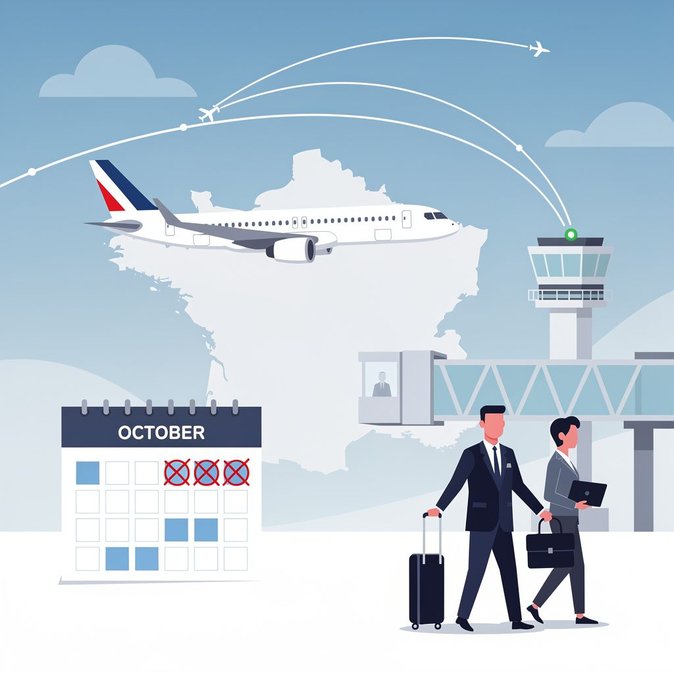
Air France confirmed on Friday morning, 24 July, that the air-traffic-controller strike planned for 7–9 October 2025—and whose contingency rebooking measures were still technically in place—has been definitively cancelled. The carrier’s Distribution Policy team issued a bulletin to travel-management companies stating that all voluntary change and refund waivers linked to the dispute are rescinded with immediate effect. Although the walk-out concerned a future date, strike warnings had already triggered booking jitters: several multinational clients froze October group travel to and from France, while others inserted strike clauses into meeting contracts. With the industrial action now off the table, Air France has reinstated its standard fare rules; tickets previously re-issued under ‘controller strike’ criteria will remain valid, but any new changes will attract normal penalties. For corporate travel managers the key takeaway is timeline risk: French ATC unions are obliged to file strike notices at least five days ahead, yet rumours often surface earlier, unsettling travellers for weeks. Companies should build automated watch-lists for French Directorate General for Civil Aviation (DGAC) advisories and pre-agree communication templates to reassure employees. Operationally, Friday’s decision also frees up scarce October airport slots. Paris-CDG and Orly have struggled to absorb post-pandemic growth, and removing the spectre of stoppages helps airlines optimise winter schedules sooner, giving procurement departments better seat availability and pricing. Finally, the episode illustrates how a single strike notice—even one that never materialises—can reverberate through global mobility programmes, affecting assignment start dates, relocation windows and project deadlines. HR should therefore keep their mobility calendars flexible and cultivate alternative routing options via neighbouring hubs such as Brussels or Zurich.