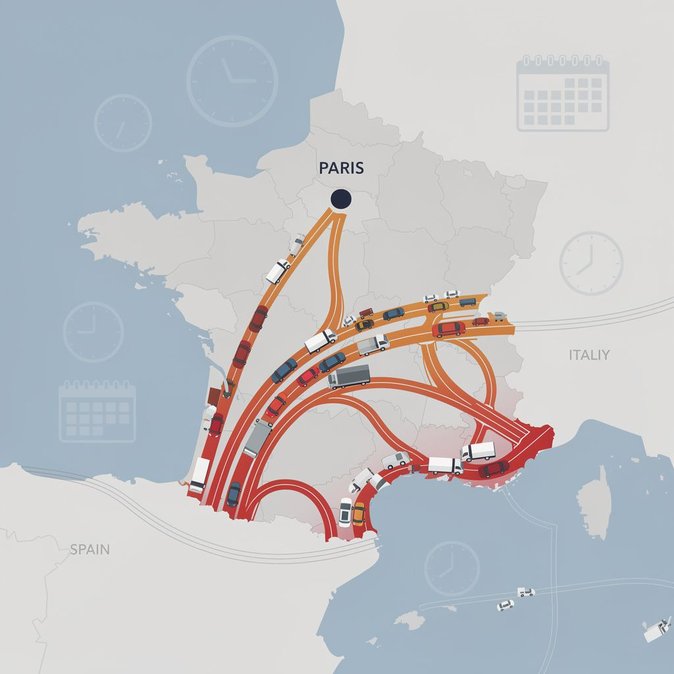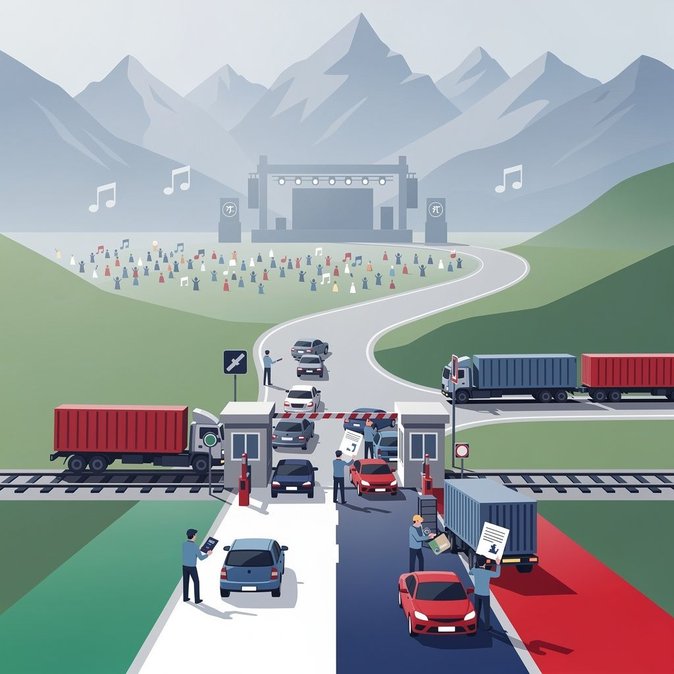
Travellers crossing the alpine frontier between France and Italy should brace for passport inspections and possible delays between 24 and 26 July 2026. According to a notification published on the European Commission’s Schengen-border control portal, Rome has reintroduced temporary checks at land crossings with France to secure the Festival dell’Alta Felicità in Venaus (Susa Valley), an event that regularly attracts anti-TAV activists opposed to the Turin–Lyon high-speed rail project. Italian authorities cite the risk of violent demonstrations and sabotage attempts against rail infrastructure as justification under Articles 25 and 28 of the Schengen Borders Code. Border police will focus on the Fréjus tunnel (A43/A32), Col de Montgenèvre and secondary mountain passes used by protesters in previous years. Commercial freight flows are also subject to inspection, although customs officials have pledged priority lanes for perishable goods. For corporate mobility managers, the key takeaway is potential disruption of employee travel between French Rhône-Alpes hubs (Lyon, Grenoble) and the Turin metropolitan area. Companies with just-in-time supply chains should consider rerouting via Switzerland or scheduling shipments outside the 48-hour window. Human-resources departments should advise assignees to carry passports or national ID cards—even if normally exempt within Schengen—and allow extra transit time. The episode underscores a broader European trend toward episodic border controls in response to security or migration concerns; France itself maintains controls along all internal borders until at least 31 October 2026. Multinationals are increasingly building contingency clauses into travel policies, recognising that the “border-free” Schengen promise can be temporarily suspended with only days’ notice.