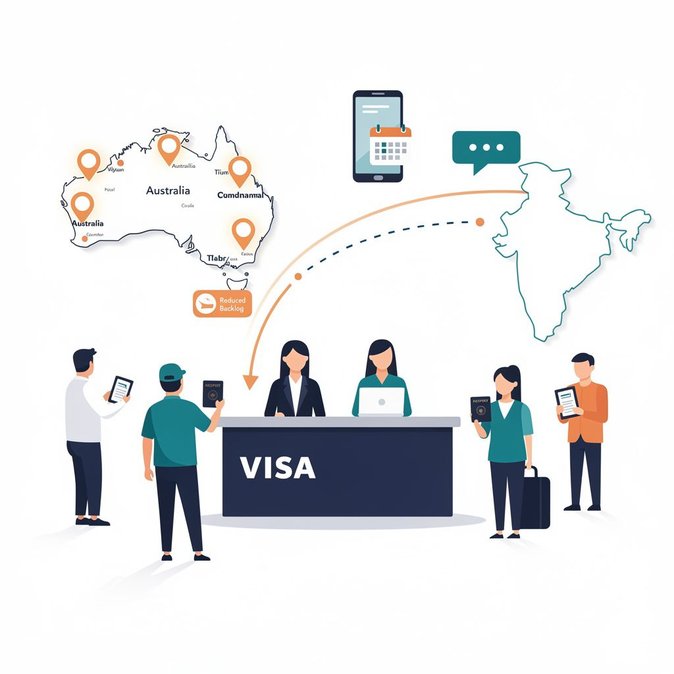
After a 23-day suspension triggered by a legal dispute over outsourcing contracts, India’s consular network in Australia is fully operational again. On 23 July, VFS Global opened six Indian Consular Application Centres (ICACs) across Sydney, Melbourne, Brisbane, Perth, Adelaide and Canberra, replacing the earlier provider’s sites. Each centre offers extended opening hours, over-the-counter and postal submissions, and optional premium add-ons such as document pick-up, SMS tracking and form-filling assistance. Applicants must now secure appointments online before visiting, a mandatory step designed to eliminate long queues and scalped slots. For corporate mobility teams, the change ends weeks of uncertainty that saw Indian assignees and business travellers unable to obtain fresh visas, Overseas Citizen of India (OCI) renewals or passport re-issues. VFS says it has increased staffing and introduced multilingual 24×7 call-centre and AI chat-bot support to handle the pent-up demand. Companies with fly-in/fly-out technical staff should nevertheless build in at least 5–7 working days for appointment availability while the backlog clears. The new centres also use VFS’s upgraded payment gateway and digital check-lists. Incomplete or mis-routed postal submissions will be returned, so global mobility managers should audit travel-agent workflows and ensure staff download the latest forms. Fees remain unchanged, but courier return charges and value-added services vary by state. Organisations with large volumes may negotiate corporate accounts for consolidated billing and real-time tracking dashboards. Practically, travellers holding appointments booked at the old provider before 30 June must re-book through the VFS portal. Those already in Australia awaiting passport renewal can reschedule exit flights now that processing has resumed. Mobility policy owners are advised to circulate updated FAQs, particularly around the new GPO box addresses for postal files and acceptable payment methods (only cashier’s cheque or card—no cash).
Source: The Economic Times