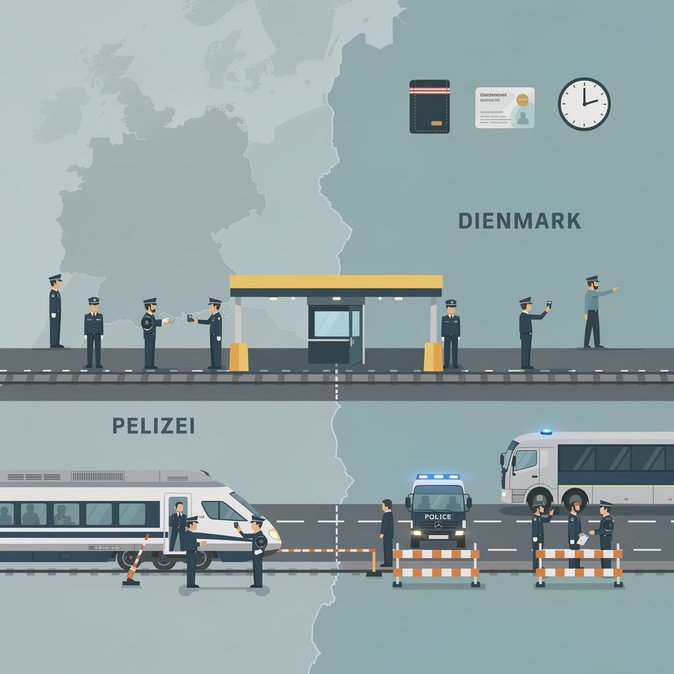
Hours after Saturday night’s deadly knife attack on Berlin’s Christopher Street Day (CSD) parade, the Federal Police (Bundespolizei) activated an emergency border-control plan covering the A7 motorway and rail corridors leading to Denmark. According to a statement cited by public broadcaster Tagesschau, officers began stopping and searching outbound vehicles in the early hours of Sunday, 26 July 2026. Additional patrols were dispatched to Flensburg rail station and to ferry ports on the Baltic Sea. The controls are being carried out under Article 25 of the Schengen Borders Code, which allows temporary checks in the event of a serious threat to public security. Interior Minister Alexander Dobrindt told Deutschlandfunk that the measures are “proportionate and time-limited” but may be extended if investigators believe suspects or accomplices could attempt to flee via Denmark or the ferry network. While Germany has kept spot checks on its Polish and Czech borders since 2024, the northern frontier with Denmark has largely remained open. The sudden re-introduction of systematic inspections is therefore creating immediate congestion on the E45/A7 corridor and forcing long-distance coach operators such as FlixBus to warn passengers of delays of up to two hours. Freight associations reported queues of six kilometres at the Ellund crossing by mid-afternoon on Sunday. Corporate mobility managers should alert travellers that passports or national ID cards will be required even on intra-Schengen trips and build extra time into road or rail itineraries. Airlines operating out of Hamburg and Bremen have been asked to verify passenger documents on flights bound for Copenhagen to prevent denied boarding at the Danish end. Employers relocating staff to northern Germany may also face short-term housing and rental-car shortages as police reserve accommodation in Flensburg and Kiel. Security analysts note that the incident underscores a wider trend: ad-hoc border controls are becoming the EU’s default response to terrorism and irregular migration. Multinational firms should therefore review contingency plans for rapid staff movement across what were previously friction-free Schengen borders.
Source: Tagesschau / NDR