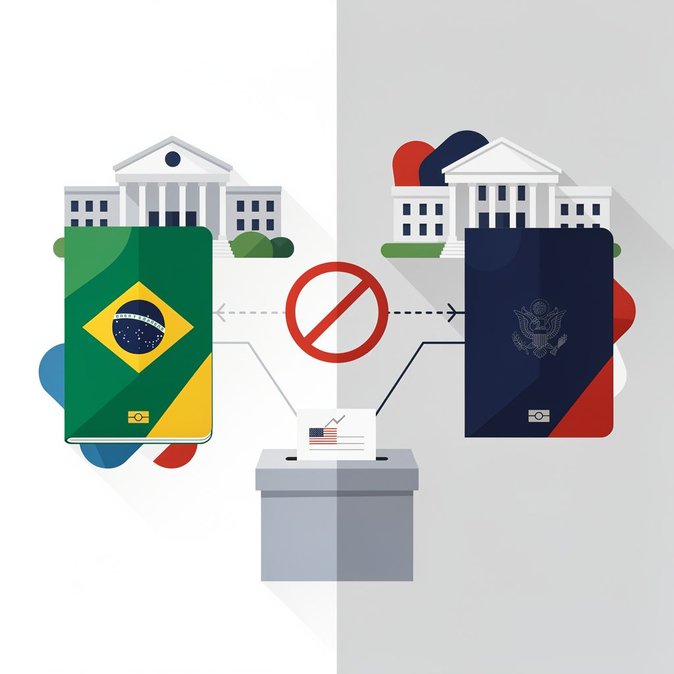
Diplomatic tensions flared this weekend as Brazil’s foreign ministry denied visa requests from two senior officials in President Donald Trump’s State Department—Assistant Secretary Riley M. Barnes and Deputy Assistant Secretary Samuel Samson—who had planned to travel to Brasília from July 27-30. Brasília accused Washington of attempting to “politically exploit” Brazil’s 2026 presidential race, now entering its final 70-day stretch. The visit, first reported by The Washington Post, was billed by the U.S. as a routine dialogue on “election integrity and religious freedom.” Brazilian officials, however, said intelligence indicated the trip was part of a broader effort to influence voter sentiment and bolster right-wing candidate Flávio Bolsonaro, son of the jailed former president. The visa denial came one day after Brazil formally protested recent U.S. tariffs on steel and aluminum and could mark the lowest point in bilateral relations since the 2013 NSA spying scandal. For U.S. business travelers, the episode is a reminder that visa reciprocity can shift quickly in an election year. While ordinary B-1/B-2 visas remain unaffected, executives heading to Brazil for sensitive sectors—election technology, data security or political consulting—should anticipate heightened scrutiny and longer processing times. Companies with ongoing projects tied to Brazil’s electoral infrastructure may face compliance reviews under the country’s newly expanded “Foreign Influence Transparency” law. The State Department said the denial is “a baseless lie” and vowed to continue “robust engagement” with Brazilian civil society, but it has not announced retaliatory measures. Possible U.S. responses include downgrading Brazil’s visa reciprocity fee schedule or delaying Brazil’s long-sought entry into the Global Entry trusted-traveler program. Analysts say the dust-up underscores a growing trend: governments are using visa policy as a tool of electoral and geopolitical leverage. U.S. multinationals should monitor local media for anti-American sentiment that could translate into strikes, protests or import hurdles in the run-up to Brazil’s October 4 vote.
Source: DW (Deutsche Welle)