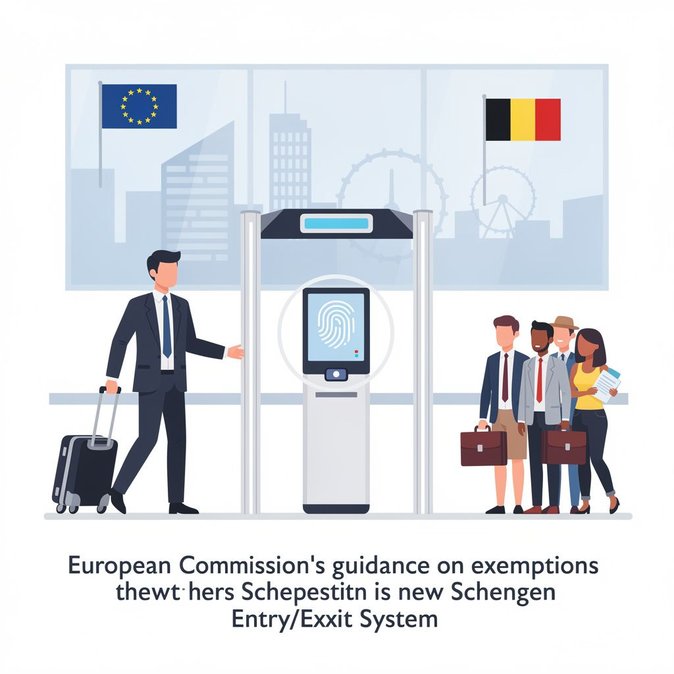
Belgian companies that routinely move non-EU staff in and out of the country should brace for a new border-control reality when employees next fly into Brussels or drive through the Port of Antwerp. The European Commission confirmed on 27 July that the Schengen Entry/Exit System (EES) has been fully operational for more than 100 days and has already logged over 145 million movements across the bloc’s external borders. The biometric system automatically records the passport data, fingerprints and facial image of every short-stay third-country national and calculates how many days of their 90/180-day Schengen allowance remain. While the technology is designed to speed up controls and eliminate passport stamps, many global mobility managers have struggled to understand exactly who is – and who is not – captured. Brussels today published a concise exemption list: holders of EU, EEA or Swiss passports, residents and long-stay visa holders (including Belgian D-visa holders), and family members of EU citizens carrying a residence card will not be enrolled in EES. For Belgian-based multinationals the clarification is significant. Inter-company transferees arriving on Single Permits or EU Blue Cards will remain outside the database, meaning HR teams need not worry about ‘overstay’ warnings for those categories. Conversely, business visitors arriving on a visa-exempt passport – for example US engineers coming for a three-week installation – will be fully tracked. Companies must therefore count every Schengen day carefully; once 90 days are reached, re-entry will be refused, regardless of work-authorisation status in Belgium. Practical tip: advise assignees to allow extra time at first entry as biometric enrolment can add several minutes. Until automated e-gates are installed at Brussels and Charleroi, manual booths will remain the norm, so peak-season queues may lengthen. Organisations should factor this into travel schedules and, where possible, combine trips to stay below the 90-day threshold.