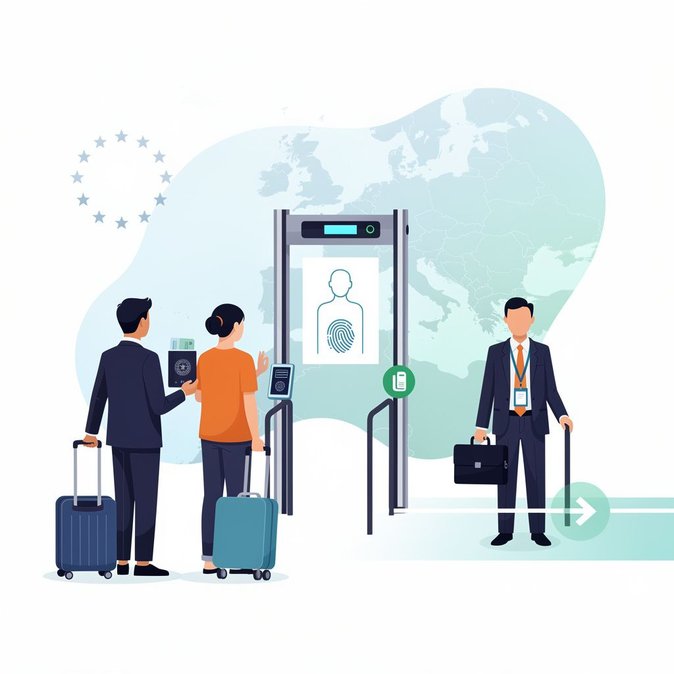
The European Commission’s Directorate-General for Migration and Home Affairs published new guidance on 27 July clarifying which categories of travellers are exempt from biometric registration in the EU’s Entry/Exit System (EES), fully operational at all external Schengen borders since 10 April 2026. The EES captures fingerprints and facial images of non-EU short-stay visitors and automatically calculates remaining Schengen days, replacing manual passport stamps. Exempt groups include holders of long-stay visas or residence permits, family members of EU/EEA citizens travelling on residence cards, and nationals of micro-states such as Andorra or Monaco. Chinese business travellers who possess a valid category "D" visa or EU residence card will therefore bypass EES kiosks and proceed directly to standard document checks, but the vast majority entering on Schengen C visas must enrol biometrics on first arrival. Since launch the system has logged more than 145 million crossings. Airlines flying to Europe from China—including Air China, China Eastern and Hainan Airlines—have begun sharing pre-departure data with border authorities to reduce bottlenecks, yet Beijing Capital travellers still report queues of up to 40 minutes at busy hubs such as Frankfurt and Paris CDG. Mobile pre-registration for frequent flyers is slated for Q4 2026 once the associated smartphone app clears data-protection audits. Corporate mobility teams should update travel briefs: first-time Schengen visitors will need to allow extra connection time and ensure that their passports contain a minimum of two blank pages for the EES receipt sticker. Expatriates with residence permits should carry the physical card even if local police have issued a digital copy, as border officers may not yet accept screenshots.